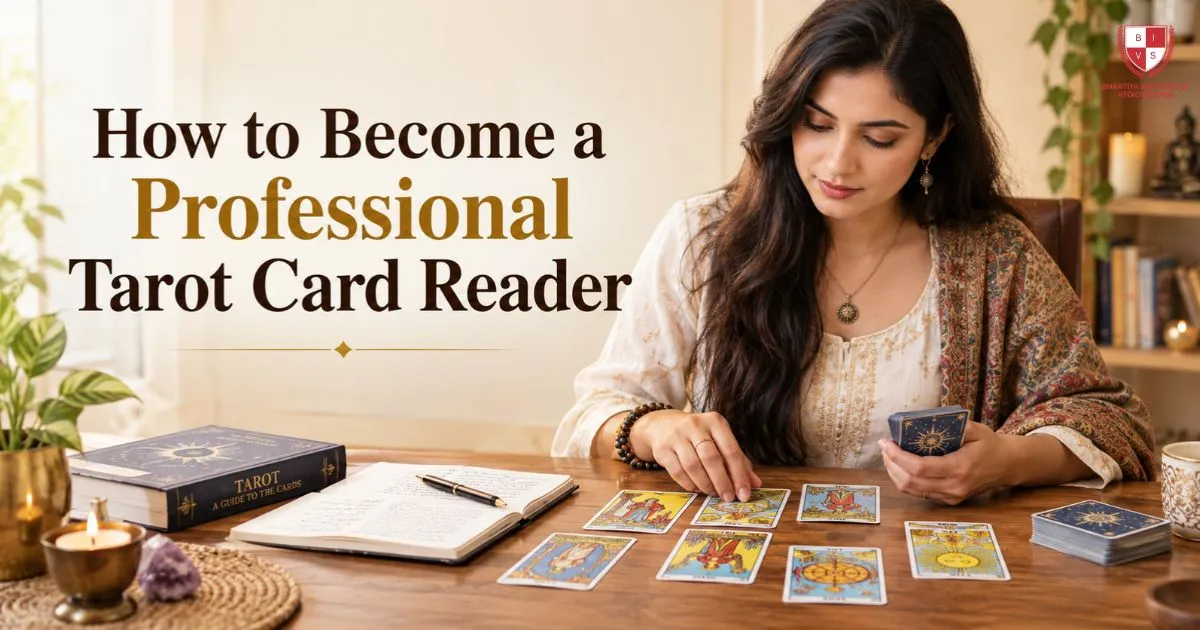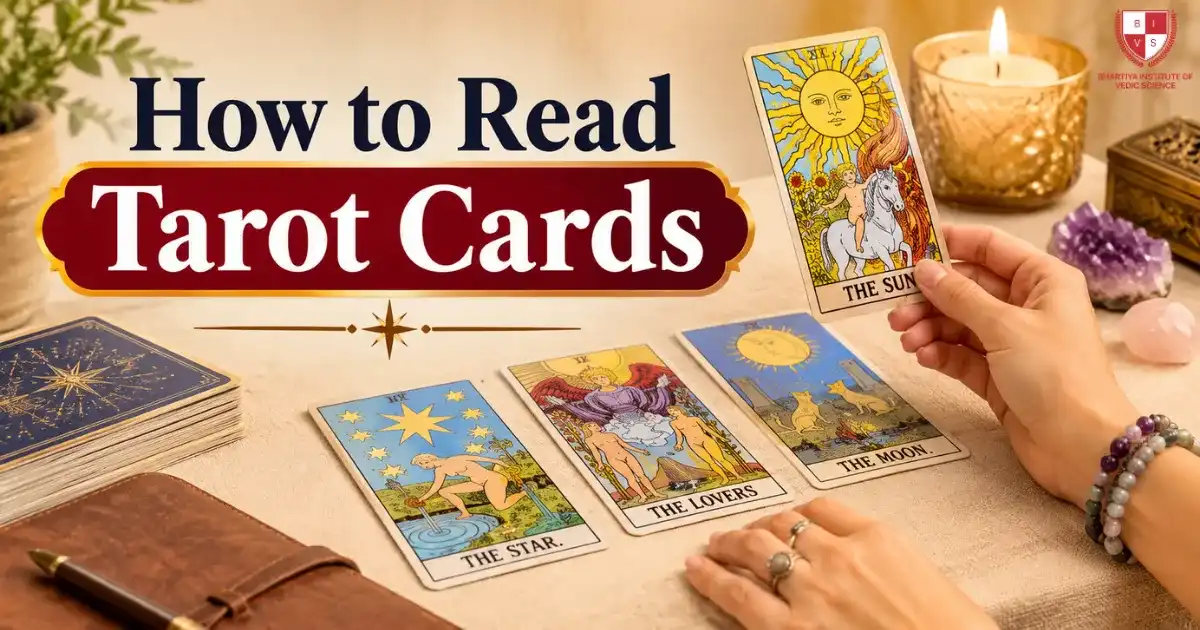
You might have seen many beautiful decadent tarot cards while scrolling through your Instagram feed and wondered if their predictions are matching up with your energy? Or you might have seen it as a career opportunity because of its easiness to learn. You might have also seen the movie Tarot and seen how card images get scary throughout the movie. Some might fear the tarot, and some might find it a career-making option. But before that, you need to know about how to read tarot cards. Once you know about it, you can use it for building your own channel or becoming a tarot card expert so that you can earn extra bucks too.
How to Read Tarot Cards for Beginners?
The answer to the question “How to read tarot cards” is very natural, but you need to know that practice involves the use of 78 cards for exploring thoughts, feelings and also the life situation. The prediction is done as per your present energy. It is like a structured beginner framework, and one can start doing your own reading. You need to know the process for reading tarot cards so that things get easy as you proceed to become a tarot card reader.
Process of Reading Tarot Cards
Picking Your Right Deck
You need to choose the right deck, and one of them is the Rider-Walte-Smith deck, which is very good for the beginners. It is the card that features rich, descriptive images and also the symbols.
Deck Splits
Here the deck splits into two types of main section:
- 22 Major Arcana (major life lessons with spirituality)
- 56 Minor Arcana (represents everyday situations)
Knowing the Basic Structure:
You need to understand the basic structure of both types of cards, as it will ease things for you:
Major Arcana (22 Cards):
It is numbered from 0 (the fool) to the XXI (the world), which shows the broad archetypes and also the major turning points.
Minor Arcana (56 Cards):
The minor card is divided into four suits as per elemental force:
-
Wands (Fire): It shows creativity, action and also passion.
-
Cups (Water): It shows emotions, love and also relationships.
-
Swords (Air): It shows intelligence, thoughts and also conflict.
-
Pentacles (Earth): It shows money, work and material security.
How a Tarot Deck is Structured
Before you start reading the single card, you need to understand the map completely, and every standard deck follows the same.
|
Deck Part |
Cards |
Meaning |
|
Major Arcana |
22 (The Fool, 0, to The World, XXI) |
Big life themes, turning points, lessons |
|
Minor Arcana: Cups |
14 |
Feelings, love, relationships (element: water) |
|
Minor Arcana: Wands |
14 |
Energy, ambition, creativity (element: fire) |
|
Minor Arcana: Swords |
14 |
Thoughts, decisions, conflict (element: air) |
|
Minor Arcana: Pentacles |
14 |
Money, work, body, home (element: earth) |
Each suit in the tarot deck runs from Ace to Ten, the plus four court cards: page, knight, queen and king. The course also describes people, or in the style of behaviour, as you are being asked to adopt.
How to Read Tarot Cards for Beginners: 7 Simple Steps
How to read tarot cards can be answered through 7 simple steps which is included in Tarot Card Course offered by the Bhartiya Institute of Vedic Science.
Choosing the Deck:
For the tarot card reading for the beginners, the Rider-Waite-Smith is best, because most of the books or courses refer to images from this deck.
Learning the Structure:
You can start with the big picture: major vs minor, the four suits and also what the numbers suggest (aces are beginnings, tens are completions). It is the framework that lets you read sensibility before knowing each card by heart.
Building a Bond
Each morning, pull one card and ask, "What should I keep in mind today?" Study the picture first: what is the figure doing, and what stands out? Then read the booklet's meaning. In the evening, note how the card showed up in your day.
Preparing Space and Question
Sit somewhere quiet. Take a few slow breaths. Then frame an open question. "Will I get the job?" invites a yes/no answer that tarot handles poorly. "What can I do to improve my chances in this job search?" gives the cards room to guide you.
Shuffle and Cut
Shuffle any way that feels comfortable while holding your question in mind. Then cut the deck into three piles and restack them. Many readers cut with the left hand, but there's no strict rule.
Lay the Spread and Read the Position, Card, and Story
Draw your cards from the top and place them face up in their positions. Read each card in its position, then link them. Ask yourself:
- What does this card mean on its own?
- What does it mean in this position?
- How does it connect to the cards beside it?
The story between cards matters more than any single definition.
Write it Down and Review
Record the date, question, cards and your interpretation in a tarot journal, and review it after a week or a month. It's the fastest way to build confidence.
How to Do a 3-Card Tarot Reading?
The 3-card tarot reading is the best spread for beginners. It's small enough to read clearly and big enough to show a story with a beginning, middle and end. Lay the three cards left to right:
Card 1: Past. What led to the current situation.
Card 2: Present. Where things stand now.
Card 3: Future. The likely direction if nothing changes.
Worked example
- Sample question: "What should I focus on to grow in my career this year?
- Sample cards drawn: Eight of Pentacles, Two of Swords, The Chariot.
- Past: Eight of Pentacles. A figure works patiently at a bench, carving coin after coin. This suggests the reader has spent time building skills through steady, repetitive effort. The foundation is already there.
- Present: Two of Swords. A blindfolded figure holds two crossed swords. Traditionally, this points to indecision or avoiding a choice. Perhaps two options are on the table (a new role or more study), and neither has been chosen.
- Future: The Chariot. A Major Arcana card of willpower, direction and forward movement. If a clear decision is made, momentum is likely to follow.
- Putting it together: "You've done the groundwork. What holds you back now is a pending decision, not skill. Choose a direction and commit, and progress can move quickly." The middle card is the turning point between the other two, and that is the heart of a 3-card spread.
Other 3-Card Layouts to Try
The 3-cards layout is necessary for you to know about. The table given below will help you learn everything about it.
|
Layout |
Card 1 |
Card 2 |
Card 3 |
Best For |
|
Past, present and future |
What led here? |
Now |
Likely direction |
General questions |
|
Situation, Obstacles and Advice |
The Situation |
What's in the way? |
What to do |
Problem-solving |
|
You, them and the relationship |
Your energy |
Their energy |
The connection |
Relationships |
|
Option A-Option B Advice |
Path one |
Path Two |
Guidance |
Decision |
How to Read Tarot Cards for Yourself?
You can read tarot for yourself, and it's one of the best ways to learn. The challenge is bias: when you care about the answer, you see what you want. These habits keep self-readings honest:
- Read when calm. Avoid reading in the middle of anger, panic or excitement.
- Ask once. Re-drawing until you get a "better" answer teaches you nothing.
- Write before you interpret. List the cards and the first words that come to mind, then reflect.
- Look for the uncomfortable message. If a card stings a little, it's often the one to sit with.
Common Beginner Mistakes to Avoid
- Memorising keywords only. Keywords open the door, but the picture and position give the real meaning.
- Worrying about reversed cards too early. Read all cards upright for your first month. Reversals can wait.
- Fearing "scary" cards. Death usually signals an ending and a new start, not physical death. The Tower points to sudden change, not doom.
What Tarot Can and Can'not Tell You?
Tarot is best used as a mirror. It can help you notice patterns, name feelings, see options you overlooked and think through a decision calmly.
Tarot cannot guarantee events, fix anyone's fate, or replace professional help. Don't use a reading to decide on medical treatment, legal action, investments or someone else's private life. A "difficult" card is an invitation to reflect, never a reason for fear.
How to Start Tarot Card Reading the Right Way
To start tarot card reading with real confidence, follow a structured path:
- Weeks 1-4: daily one-card draws and a journal.
- Weeks 5-8: 3-card spreads on your own questions, then for friends who agree to it.
- Months 3-6: court cards, card combinations, reversals and larger spreads.
- Ongoing: ethics, practice and feedback from a teacher.
The Professional Tarot Reading Course at Bhartiya Institute of Vedic Science (BIVS) covers this path in about 2 months of live interactive classes in Hindi and English. The syllabus moves from the history of tarot and card cleansing through the Major Arcana, the four suits of the Minor Arcana, spreads and reading techniques, with doubt sessions included. You can see every module in the full course syllabus.