By Jyoti Chauhan, Content Writer · Reviewed by Gurudev Shrie Kashyap, Founder, Bhartiya Institute of Vedic Science
Key Takeaways
- Mangal dosha (also called Manglik or Kuja dosha) is said to occur when Mars sits in certain houses of the birth chart, most often the 1st, 4th, 7th, 8th and 12th, and in some traditions the 2nd.
- By simple arithmetic, a random Mars falls in 5 of the 12 houses about 42% of the time, so the condition is very common and not rare.
- Traditional astrology lists many cancellations, such as Mars in its own or exalted sign, or both partners having the same condition.
- Marriage compatibility depends on the whole chart, not on Mars alone.
- No Manglik person is "unlucky", and no marriage should be refused on this one point.
Every wedding season brings the same worried phone call. A family has found a good match, the kundalis are exchanged, and then someone says the word: Manglik. Suddenly a happy conversation turns into a long silence.
That worry is much bigger than the astrology behind it. Mangal dosha is one of the most discussed and most misunderstood ideas in Jyotish, and a calm look at what it actually says takes much of the fear away.
This guide explains Mangal dosha as the texts and teachers describe it: what it is, how it forms, the common myths, the cancellations and how it fits into marriage matching.
What Is Mangal Dosha?
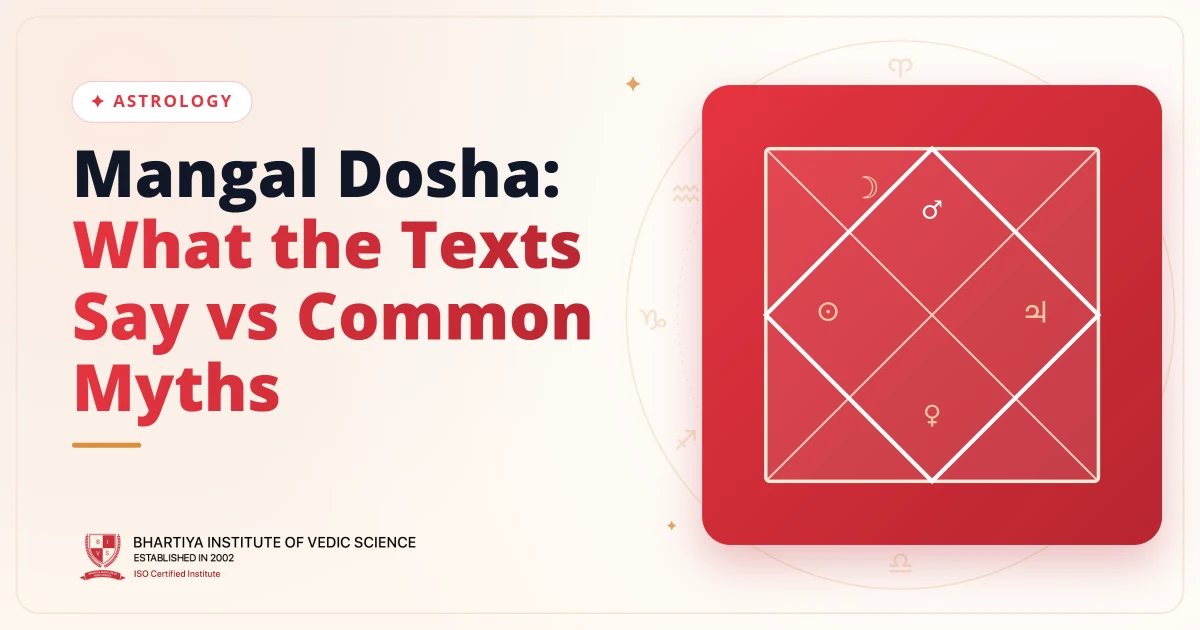
Mangal dosha is a condition in Vedic astrology in which Mars (Mangal) occupies certain houses from the ascendant. Mars is the planet of energy, courage and conflict, and these houses are linked to the self, home, partnership and shared life. Tradition says the strong, fiery nature of Mars may add heat or friction to these areas, particularly marriage. The idea is discussed in Jyotish literature, including the Brihat Parashara Hora Shastra and later works, and teachers differ on the exact rules.
The word Manglik simply means a person whose chart has this condition. In some regions the term Kuja dosha is used. If you are new to charts and houses, begin with our guide to what Vedic astrology is.
How Mangal Dosha Is Formed
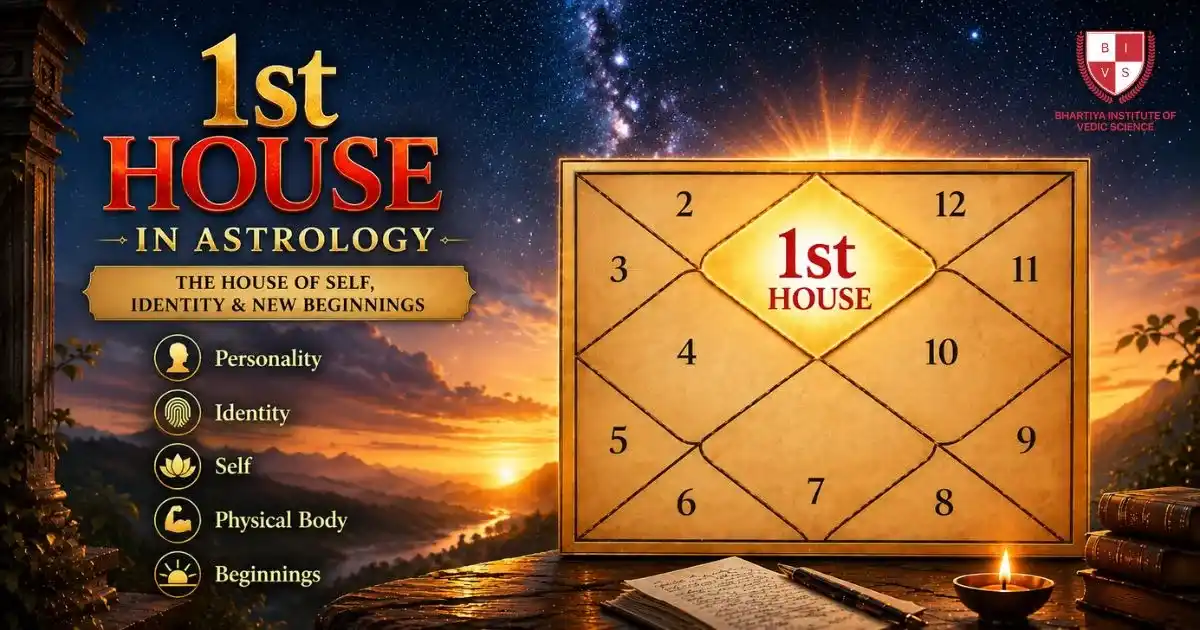
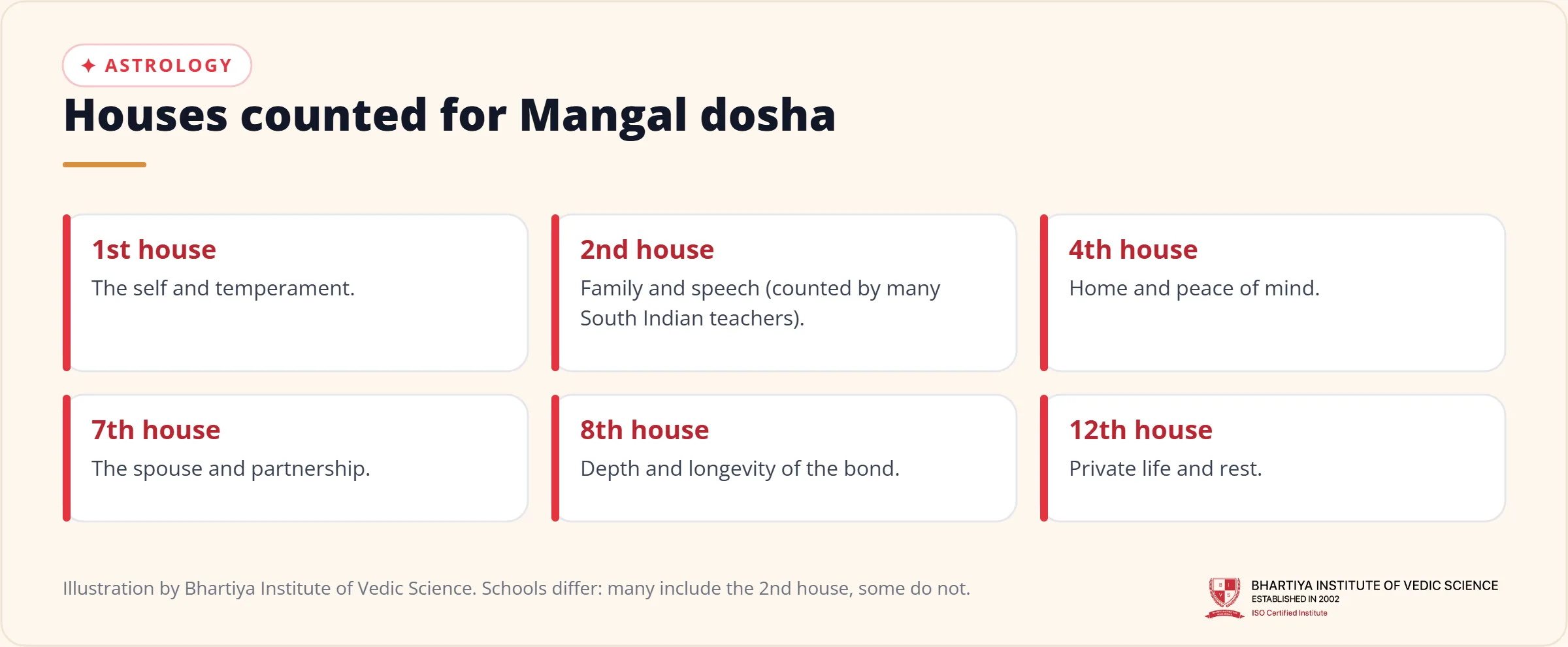
To check the condition, find the house in which Mars sits in the chart. Counting from the ascendant, the houses most commonly counted are the 1st, 4th, 7th, 8th and 12th. Many teachers, especially in South India, add the 2nd house. Some also check the same positions counted from the Moon and from Venus.
The reason these houses matter is simple. The 1st house is the self, the 2nd is family and speech, the 4th is home and peace of mind, the 7th is the spouse, the 8th is the depth of the relationship, and the 12th is private life and bed comfort. Mars in or aspecting these houses is read as adding intensity. Our guide to the 7th house in astrology explains the marriage house in detail.
Why So Many People Are Called Manglik
Here is a simple calculation. If Mars could fall in any of the 12 houses with equal chance, then five houses out of 12 gives about 42%. With the 2nd house included, six out of 12 gives 50%. That means between two and five of every ten people would be labelled Manglik by the broad rule, and it explains why the label is so common in matchmaking.
It also raises a fair question. If this many people are Manglik, the condition cannot be as rare or as serious as the fear around it suggests. That is why teachers insist on checking the strength of Mars, its sign and the cancellations before drawing any conclusion.
Five Common Myths About Mangal Dosha
Myth 1: A Manglik person will have a failed marriage
The traditional reading is that Mars can add heat to married life, which is a theme to understand and manage, not a sentence. Many successful marriages involve a Manglik partner, and many marriages between two non-Manglik people struggle.
Myth 2: It harms the partner's life
This claim has no place in responsible practice. A partner's life and health cannot be read from one planet, and frightening a family with such statements is unethical.
Myth 3: Manglik people must marry only Manglik people
Matching two Manglik charts is one of the traditional cancellations, but it is not the only path. Compatibility depends on the whole chart of each partner and on the two people involved.
Myth 4: Mangal dosha is permanent and cannot change
The placement in the chart is fixed at birth, but its effect is read through dashas and transits, which change over time. Many teachers also say that the intensity softens with maturity.
Myth 5: It affects women more than men
The rules apply equally. There is no basis in the method for treating one gender as more affected, and families should be careful not to use the label to shame a daughter or a son.
Cancellations of Mangal Dosha
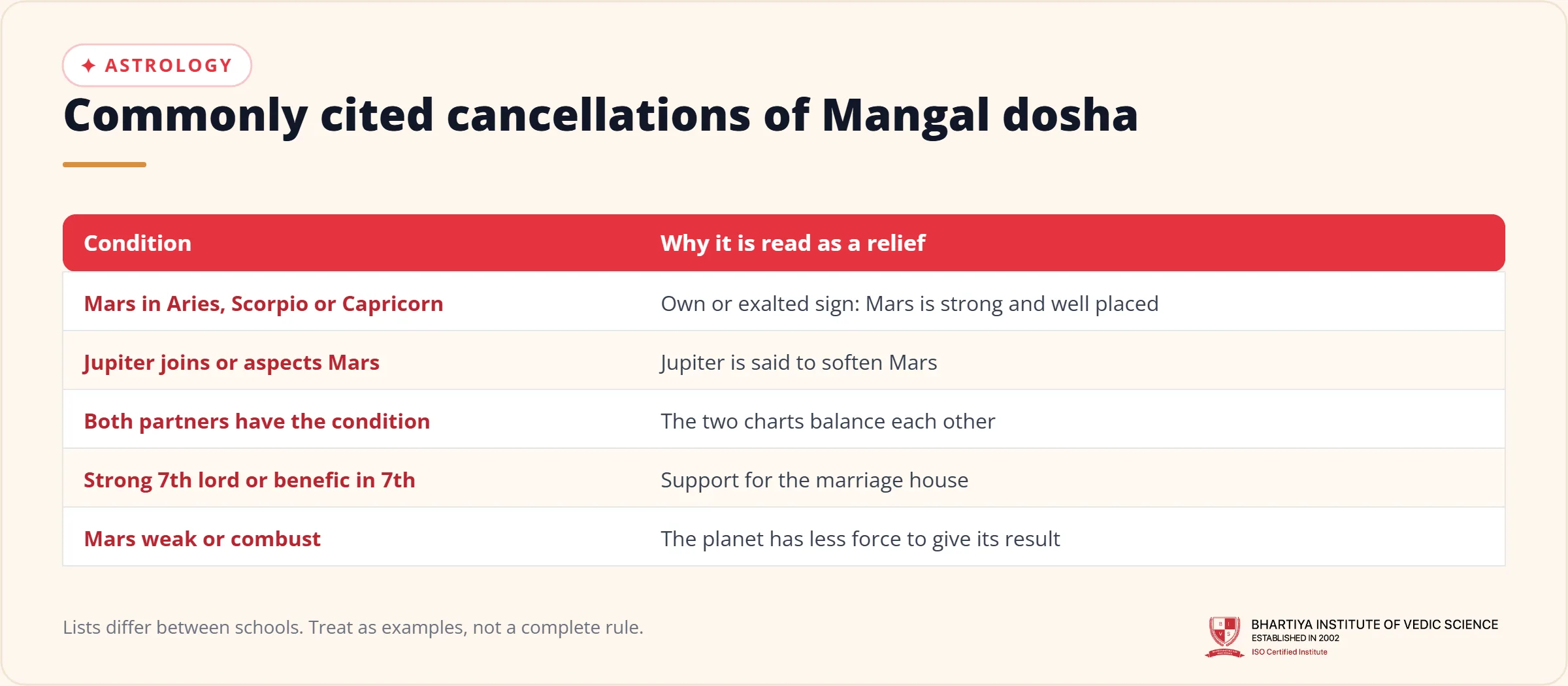
Jyotish traditions list several conditions that reduce or cancel the dosha. Lists differ between schools, so treat these as commonly cited examples and not as a complete rule.
- Mars in its own sign or exalted: Mars in Aries or Scorpio (own signs) or Capricorn (exalted) is read as strong and well placed.
- Jupiter's influence: a conjunction or aspect of Jupiter on Mars or on the affected house is said to soften the effect.
- Both partners with the condition: the two charts are said to balance each other.
- Mars in specific sign and house pairs: several schools list particular combinations that cancel it.
- The rest of the chart: a strong 7th lord, benefic planets in the 7th house or a supportive Venus are read as positive.
A Worked Example
Here is an invented sample chart for teaching, not a real person. Suppose Mars sits in the 4th house in the sign Scorpio. By the house rule, the chart is Manglik, because Mars is in the 4th. But Scorpio is a sign ruled by Mars itself, so Mars is in its own sign and is read as strong and steady, which is one of the commonly cited cancellations.
A teacher would not stop there. They would check which planets aspect Mars, how the 7th lord is placed, and what the partner's chart shows. The example shows why the label alone says very little, and why the next step is always to read the whole chart.
Mangal Dosha and Marriage Matching
In matchmaking, Mangal dosha is only one of several checks. The traditional Ashtakoot or Guna Milan method scores eight areas of compatibility, and then the full charts are compared. You can try the basic score with our free kundali matching tool, and then ask a qualified teacher to review the whole chart.
A few kind principles help any family going through this:
- Look at both full charts, not only Mars.
- Do not rush a decision in either direction because of one label.
- Talk to each other. Shared values, communication and respect matter more than any single planet.
- Avoid shaming. A chart placement should never be used against a person or a family.
Traditional Practices People Follow
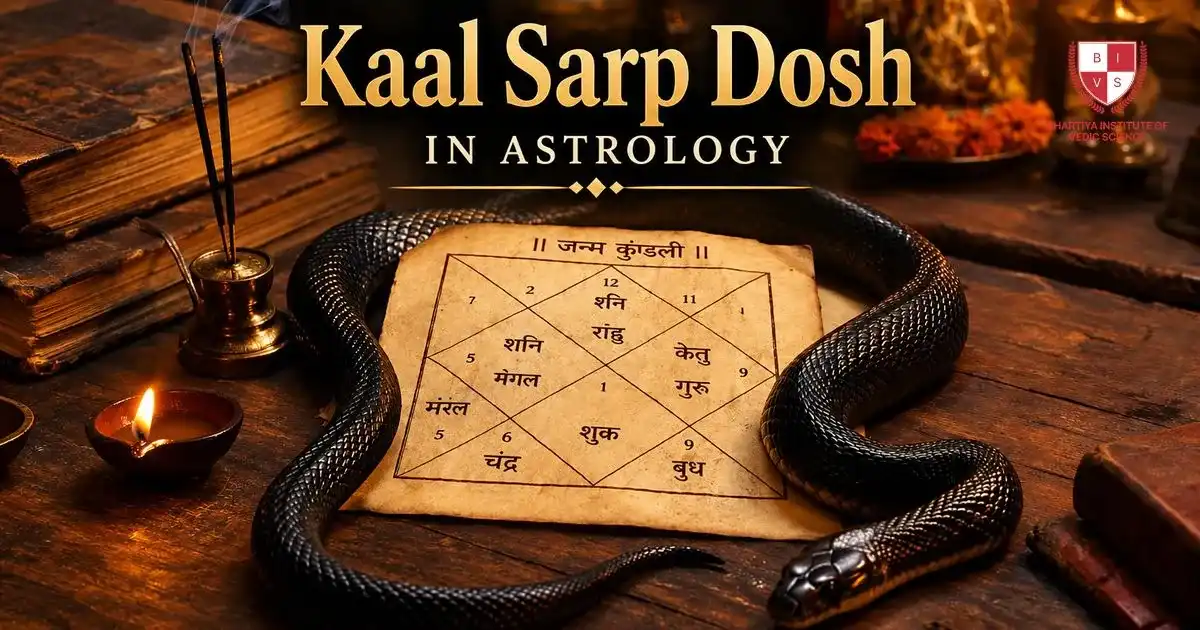
Families often follow simple, low-cost traditions such as reciting the Hanuman Chalisa, fasting on Tuesdays or offering prayers on Mars-related days. These are traditional and personal, and nobody needs to buy anything. If a person offers an expensive ritual or product to "cancel" the dosha, treat it with caution and take a second opinion. For related reading, see our guide to Kaal Sarp Dosh, another dosha that is often presented with more fear than it deserves.
Learning to Read the Chart Yourself
The best protection against fear is knowledge. Once you can read a chart, you can see Mars in context. Start with our step-by-step guide to reading a kundali, and if you want to learn with a teacher, the astrology course at Bhartiya Institute of Vedic Science teaches houses, planets, dashas and compatibility in live classes, in Hindi and English, with certificate on completion. Bhartiya Institute of Vedic Science is an ISO Certified Institute, registered under NCT of Delhi, and has been teaching since 2002.
What Mangal Dosha Can and Cannot Tell You
Mangal dosha is a traditional pointer to the influence of Mars on married life. It cannot predict whether a marriage will succeed, whether a partner will be safe, or whether a particular match is right. Such decisions belong to the two people and their families, based on understanding, values and, where relevant, professional advice.
Conclusion
Mangal dosha is common, its rules vary between schools, and it has many cancellations. Read calmly, it is a reason to look at a chart carefully and not a reason to turn away a good match.
If you want to understand charts well enough to judge such questions yourself, you can book a free 15-minute demo call and see how the course is taught. Which myth about Mangal dosha did you hear most often?
This article shares traditional astrology knowledge for educational purposes. It is not a substitute for professional medical, legal or financial advice.