By Jyoti Chauhan, Content Writer · Reviewed by Gurudev Shrie Kashyap, Founder, Bhartiya Institute of Vedic Science
Key Takeaways
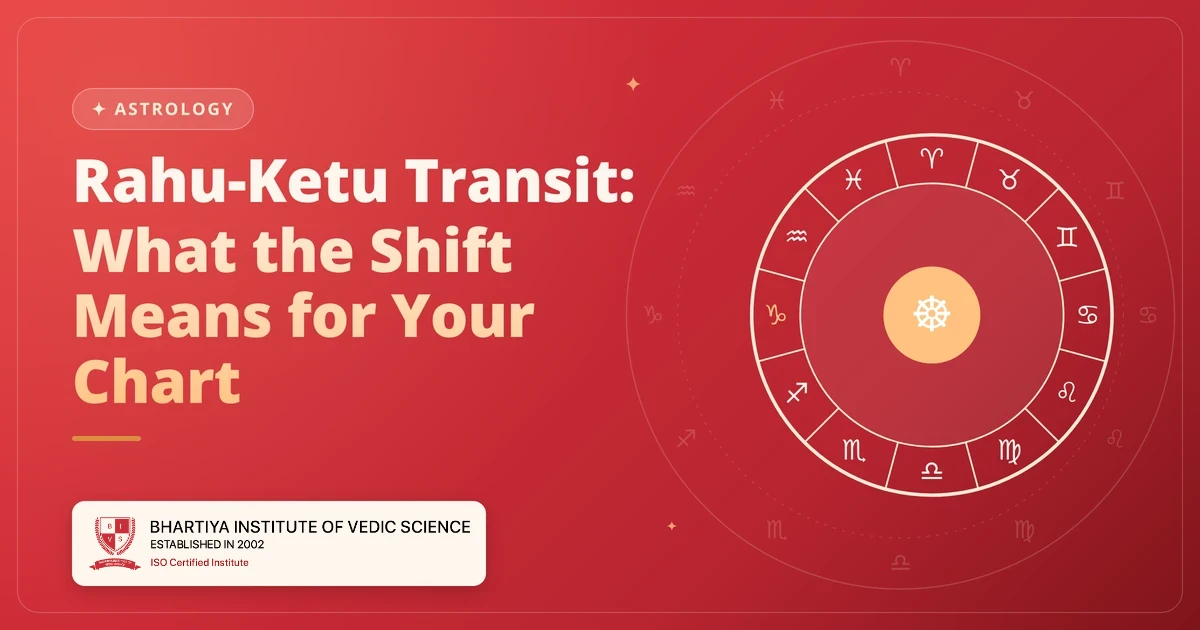
- The Rahu Ketu transit of 2026 moves Rahu from Aquarius into Capricorn (Makara) and Ketu from Leo into Cancer (Karka). Drik Panchang gives 5 December 2026, 7:28 PM IST (New Delhi, mean node).
- Almanacs that use the "true" node show an earlier date: 25 November 2026, 4:34 PM IST. Both are correct; they use two different calculation methods.
- Rahu and Ketu are not physical planets. They are the two lunar nodes, the points where the Moon's path crosses the Sun's path. That is why eclipses happen near them.
- The nodes stay in one sign for about 18 months, so this axis lasts until around mid-2028.
- Vedic astrology reads the transit by house from your Moon sign. The table below shows where Rahu and Ketu fall for all 12 signs.
Every 18 months or so, astrology pages, family WhatsApp groups and the occasional worried relative start talking about the same thing: "Rahu-Ketu badal rahe hain" (Rahu and Ketu are changing signs). The news can sound dramatic. It does not need to be.
The Rahu Ketu transit of late 2026 is one of the slower, steadier shifts in the sky. It sets a background theme for about a year and a half. It does not decide your fate in one evening. In this guide you will find the verified dates, a plain-English explanation of what Rahu and Ketu actually are, how astrologers read the shift for each Moon sign, and what the transit can and cannot tell you.
Rahu Ketu Transit 2026: Dates and Timings
Rahu and Ketu always move together, exactly opposite each other, and always in reverse (retrograde) order through the zodiac. So when Rahu leaves Aquarius for Capricorn, Ketu leaves Leo for Cancer at the same moment.
| Event | Mean node (most Indian panchangs) | True node |
|---|---|---|
| Rahu enters Capricorn (Makara) | 5 Dec 2026, 7:28 PM IST | 25 Nov 2026, 4:34 PM IST |
| Ketu enters Cancer (Karka) | 5 Dec 2026, 7:28 PM IST | 25 Nov 2026, 4:34 PM IST |
| Previous position | Rahu in Aquarius, Ketu in Leo (since May 2025) | |
| Next change | Around mid-2028, into Sagittarius and Gemini | |
Timings are for New Delhi (IST) as published in the Drik Panchang almanac for 2026. Some websites quote slightly different clock times for the mean node, because each software rounds the node's position a little differently. The date is what matters for a slow-moving transit.
Mean node or true node: which one should you follow?
The mean node is the average position of Rahu. The true node is its actual position, which wobbles back and forth. Most traditional Indian panchangs and many teachers of Parashari astrology use the mean node. Many software packages default to the true node. Neither is "wrong". Pick one method and use it consistently in your own chart work.
What Are Rahu and Ketu? The Lunar Nodes Explained
Rahu and Ketu are the north and south lunar nodes: the two points where the Moon's orbit cuts across the ecliptic, the Sun's apparent path in the sky. They have no mass and no light. Vedic texts call them chhaya graha (shadow planets) because their effect is linked to eclipses, when a shadow covers the Sun or Moon.
The Moon's orbit is tilted about 5 degrees to the ecliptic. A solar or lunar eclipse can only happen when a new or full Moon falls close to one of these two crossing points. NASA's eclipse pages explain how the Moon's nodes control eclipse seasons. Ancient Indian astronomers knew this too, which is why eclipses became the story of Rahu "swallowing" the Sun or Moon.
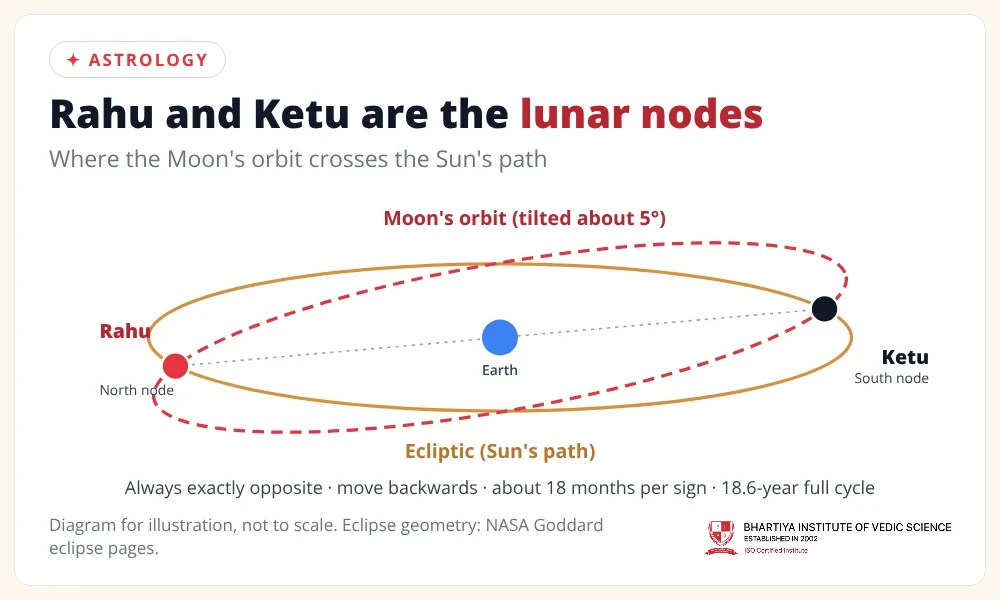
The nodes also move. They slide backwards through the zodiac and complete a full circle in about 18.6 years. That gives roughly 18 months in each sign, which is why a Rahu Ketu transit comes around only once every year and a half.
If you are new to grahas, rashis and houses, start with our guide to what Vedic astrology is and how it works. It covers the building blocks this article uses.
The Story Behind Rahu and Ketu
The Puranas tell the story of the Samudra Manthan, the churning of the cosmic ocean. When the nectar of immortality (amrit) appeared, an asura named Svarbhanu disguised himself and drank a sip. The Sun and Moon recognised him and told Vishnu, who cut off his head with the Sudarshan Chakra. Because he had already tasted amrit, both parts survived. The Srimad Bhagavatam (Canto 8, Chapter 9) tells this episode, and versions appear in other Puranas too. The head became Rahu and the body became Ketu.
In astrology the story becomes a symbol. Rahu, a head without a body, stands for desire, appetite and the drive to have more. Ketu, a body without a head, stands for letting go, detachment and inner knowing. Together they form an axis: what you are reaching for, and what you are ready to release.
What the Capricorn-Cancer Axis Means
Astrologers read a node transit through the signs involved. This time, the two signs sit on a natural axis of public life and private life.
- Rahu in Capricorn: Capricorn is an earth sign ruled by Saturn, linked with work, structure, duty, institutions and long-term effort. Traditional texts associate Rahu here with ambition, a hunger for status and results, and new ways of doing old work.
- Ketu in Cancer: Cancer is a water sign ruled by the Moon, linked with home, mother, emotional security and roots. Ketu here is read as a pull towards inner peace, simpler family life and less attachment to comfort.
- The theme together: balancing career and outer goals (Rahu) with home and emotional needs (Ketu). Many astrologers describe this period as a good time to set long-term goals while not neglecting the people at home.
Rahu Ketu Transit Effects by Moon Sign
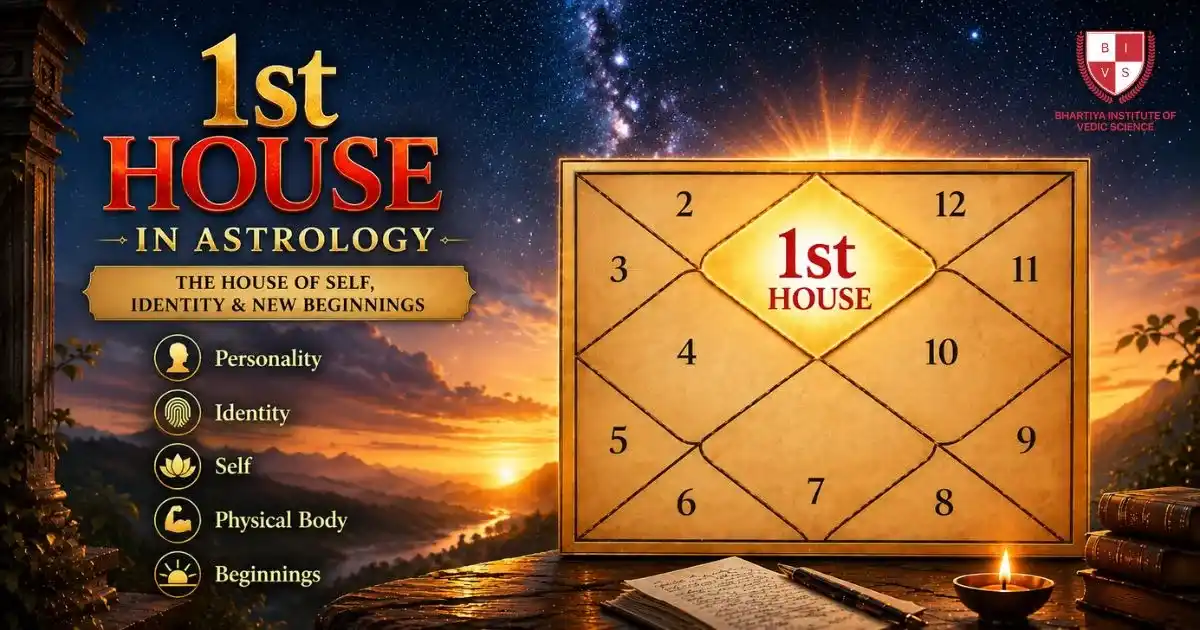
In Vedic astrology, transits (gochar) are usually read from your Moon sign (chandra rashi). Count the sign Rahu occupies as a house from your Moon sign. Ketu always falls in the opposite house. If you are not sure what a "house" means, our guides to the 1st house (self and body) and the 7th house (partnership) are good starting points.
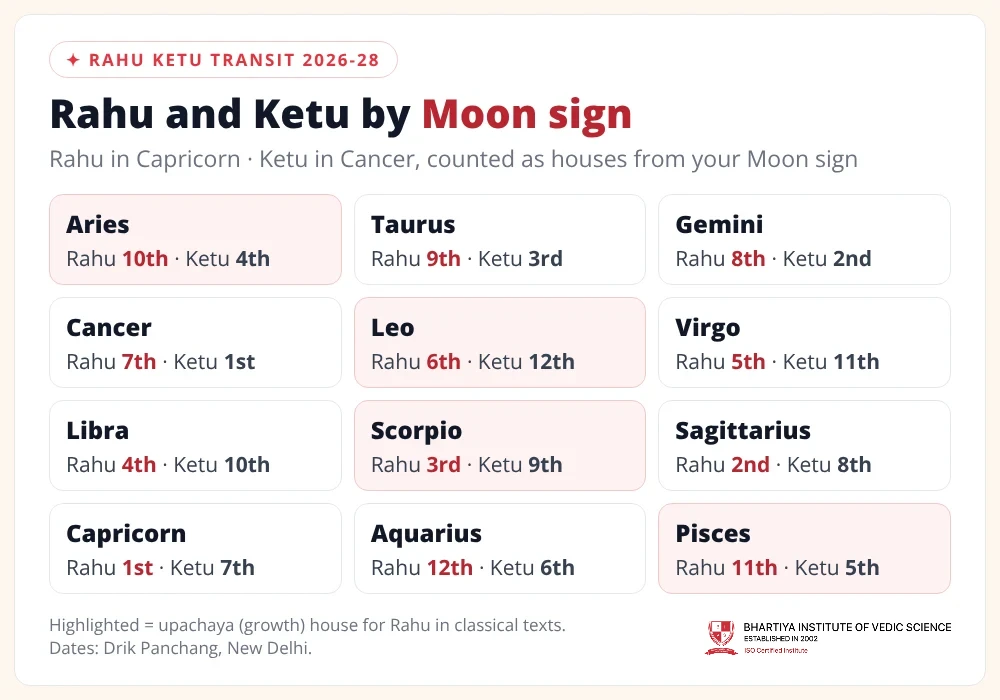
| Moon sign | Rahu (Capricorn) house | Ketu (Cancer) house | Theme astrologers often note |
|---|---|---|---|
| Aries (Mesha) | 10th | 4th | Career push; make time for home |
| Taurus (Vrishabha) | 9th | 3rd | Higher learning, travel, beliefs |
| Gemini (Mithuna) | 8th | 2nd | Research, shared finances, care with speech |
| Cancer (Karka) | 7th | 1st | Partnerships; self-reflection |
| Leo (Simha) | 6th | 12th | Discipline, routines, rest and retreat |
| Virgo (Kanya) | 5th | 11th | Study and creativity; fewer, closer friends |
| Libra (Tula) | 4th | 10th | Home, property, reviewing career aims |
| Scorpio (Vrishchika) | 3rd | 9th | Courage, skills, communication |
| Sagittarius (Dhanu) | 2nd | 8th | Family, savings, speech |
| Capricorn (Makara) | 1st | 7th | Self-image, new direction; patience in relationships |
| Aquarius (Kumbha) | 12th | 6th | Travel abroad, spiritual practice, letting go |
| Pisces (Meena) | 11th | 5th | Networks, gains, goals |
Classical texts such as the Brihat Parashara Hora Shastra and Phaladeepika traditionally treat the 3rd, 6th, 10th and 11th houses (the upachaya or "growth" houses) as supportive places for Rahu. So Scorpio, Leo, Aries and Pisces Moon signs often hear that this transit suits effort and growth. That is a general rule of thumb, not a promise.
Why your own chart matters more than this table
A transit table is a starting point. A proper reading also checks:
- Your running dasha: a Rahu or Ketu mahadasha or antardasha makes the transit far more noticeable.
- Your ascendant (lagna): many astrologers read transits from both the Moon and the ascendant.
- Natal planets near the transit degrees: Rahu passing over your natal Sun, Moon or ascendant matters more than an empty sign.
- Other slow planets: Saturn and Jupiter transits shape the overall picture.
Common Myths About the Rahu Ketu Transit
- "Rahu-Ketu will bring bad luck to everyone." No classical text says this. Each sign gets a different house placement, and several placements are traditionally called favourable.
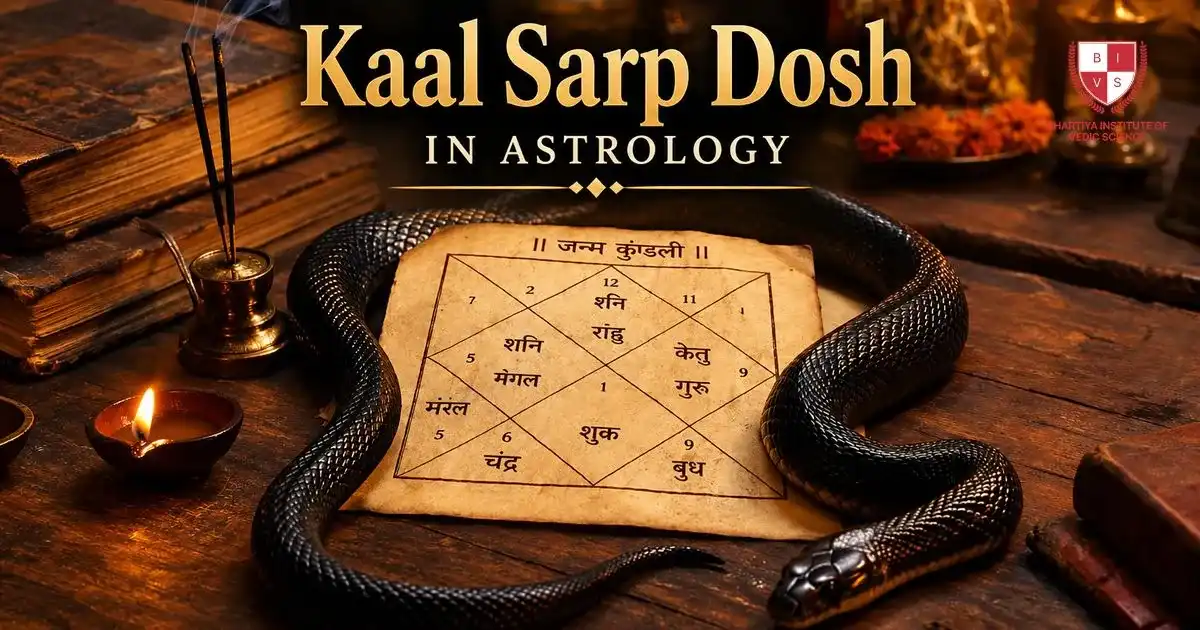
- "The transit causes Kaal Sarp Dosh." Kaal Sarp is a birth-chart pattern, not a transit. Read our calm explainer on Kaal Sarp Dosh in astrology for what the texts actually say.
- "You must buy a gemstone or book a puja." Traditional guidance for the nodes is simple: steady routine, honesty, prayer or mantra if it suits your belief, and charity. Nothing you have to pay for.
- "Everything changes on the transit day." Node effects build slowly over months. Nothing flips overnight.
What This Transit Can and Cannot Tell You
A transit describes a season of themes: where your attention may go, which areas of life feel busy or quiet. It cannot predict specific events, health outcomes or money results on its own, and no honest astrologer will promise that it does. Use it as a prompt for reflection and planning. Your own effort and choices still matter most.
How to Learn to Read Transits Yourself
Reading transits well means combining houses, signs, dashas and your own birth chart. Most students start with the 12 houses, then the nine grahas, then timing tools like dasha and gochar. If you are thinking of turning that interest into practice, our guide on how to become a professional astrologer in India walks through the full learning path.
Bhartiya Institute of Vedic Science teaches astrology in live interactive classes in Hindi and English, with doubt sessions, recordings and a certificate on completion. It is an ISO Certified Institute, registered under NCT of Delhi and teaching since 2002.
Conclusion
The late-2026 Rahu Ketu transit moves the nodes onto the Capricorn-Cancer axis for about 18 months, putting career and home side by side as the main theme. Look up which houses the nodes fall in from your Moon sign, then check your own dasha before drawing any conclusions. Stay calm, plan well and keep your routine steady. If you would like to read charts like this yourself, explore the astrology course at Bhartiya Institute of Vedic Science.
This article shares traditional astrology knowledge for educational purposes. It is not a substitute for professional medical, legal or financial advice.