When you hear the word kundli or prediction, the first thing that comes to mind is astrology or Jyotish Shastra. Now, what comes to mind is Vedic astrology? It is defined as one of the ancient Indian systems that is known for studying the relationship between the planets, their movements, their effect on human life, and many other related things. If you are a beginner, then studying astrology will feel complicated, because the concepts are very interconnected, like the birth chart, Kundli, Navagraha, zodiac signs, Nakshatras, planetary positions, houses, Dashas, Yogas, and the planetary transits.
But the good news is that you need to know a few basics, and astrology will become easy for you. By understanding the fundamental structure of kundli learning and how major components work together, you can learn the foundation of astrology.
When you go to a restaurant, you often order starters before going for the full course meal. Similarly, before going deep into astrology, you need to have a starter guide. A guide that helps you understand how a Vedic chart is constructed, what planets and zodiac signs represent, how nakshatras affect life, and how astrologers predict through the help of planetary positions.
What is Vedic Astrology?
The Indian Jyotish is one of the traditional Indian astrological systems which is about studying of celestial bodies, calendars, time etc. The word Jyotisha is associated with the light and celestial observation. Also its historical development is closely connected with the Indian astronomy and calendar making, But the Vedanga Jyotisha is one of the earliest surviving work which is about Indian astronomical timekeeping, dealing with the position of the Sun and Moon which is related to Nakshatras, along with the months, seasons, lunar days and also other measures of the time.
The historical background is very important because the ancient jyotish is developed alongside the detailed observation of the celestial cycle. With time the Indian astral traditions is known for developing into the multiple branches which is about the calendars, auspicious timing, natal astrology, planetary calculations and also other subjects.
So when people use the term Vedic astrology, it means the tradition for the jyotish based horoscope interpretation, especially for analysing the person’s birth chart or the kundli.
Exploring Jyotish: The Basics Idea
So,if you are at the beginner level, then you need to understand that Vedic Astrology is one of the symbolic system which is built around several major components:
Birth Date:
Your exact date of birth. (certificate issued by hospital).
Birth Time:
The exact time you were born.
Birth Place:
The exact place (latitude and longitude), district, place, country etc.
Zodiac signs or Rashis:
The 12 zodiac signs are based on Sun and Moon signs.
Planets or Grahas:
The 9 planets that affect the birth chart, its transitions and many other things.
Houses or Bhavas:
Learn about the 12 Houses and Bhavas that are known for impacting your life.
Nakshatras:
Learn about the 27 Nakshatras or constellations that impact human life.
Planetary Aspects:
Know about the planetary aspects that determine human life.
Dashas:
Learn about the various types of Dashas, time period and many other things.
Transits or Gochar:
The transits or the Gochar are not known for being interpreted separately. If you want to pursue a career as an astrologer, you must know how to interact within the entire chart.
For example,if you know someone has the Sun in the particular zodiac sign, then it adds as only one piece of information. But if you are an astrologer, then you need to examine the Sun’s house placement,relationship with the other planets, the Nakshatra occupied by the Sun,the condition of the house it rules, relevant Dashas and also the current transits.
Note: Being a beginner, do not interpret one planetary position in isolation. You need to read the complete chart as the interconnected system.
Read More: How to Become a Successful Professional Astrologer?
Explanation of Birth Chart or Kundli
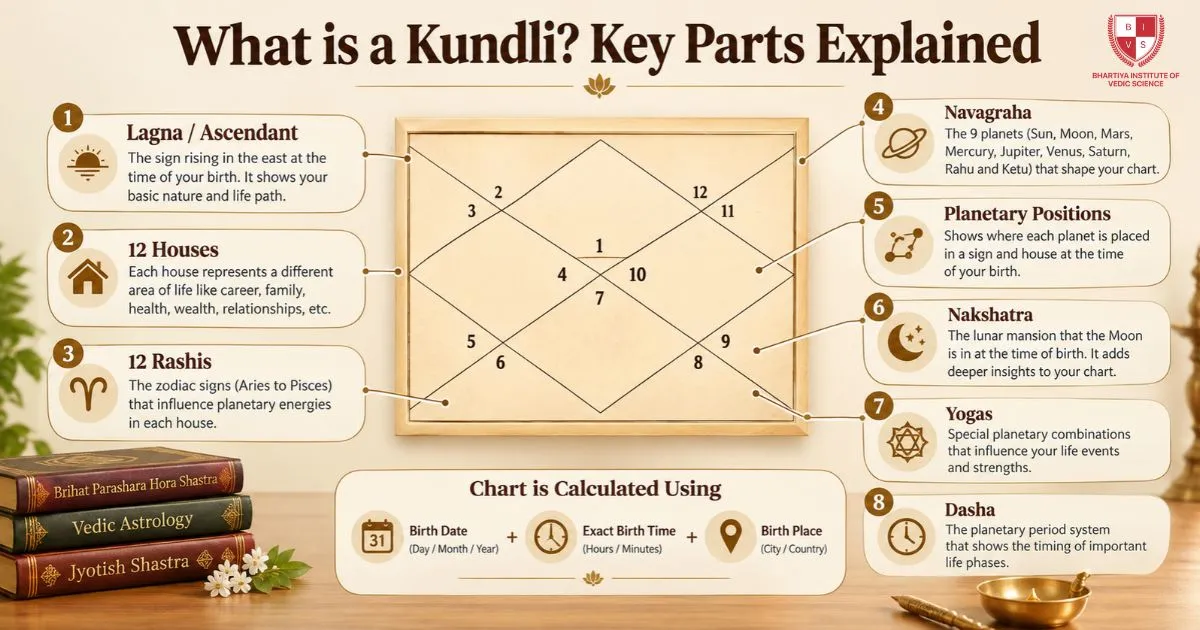
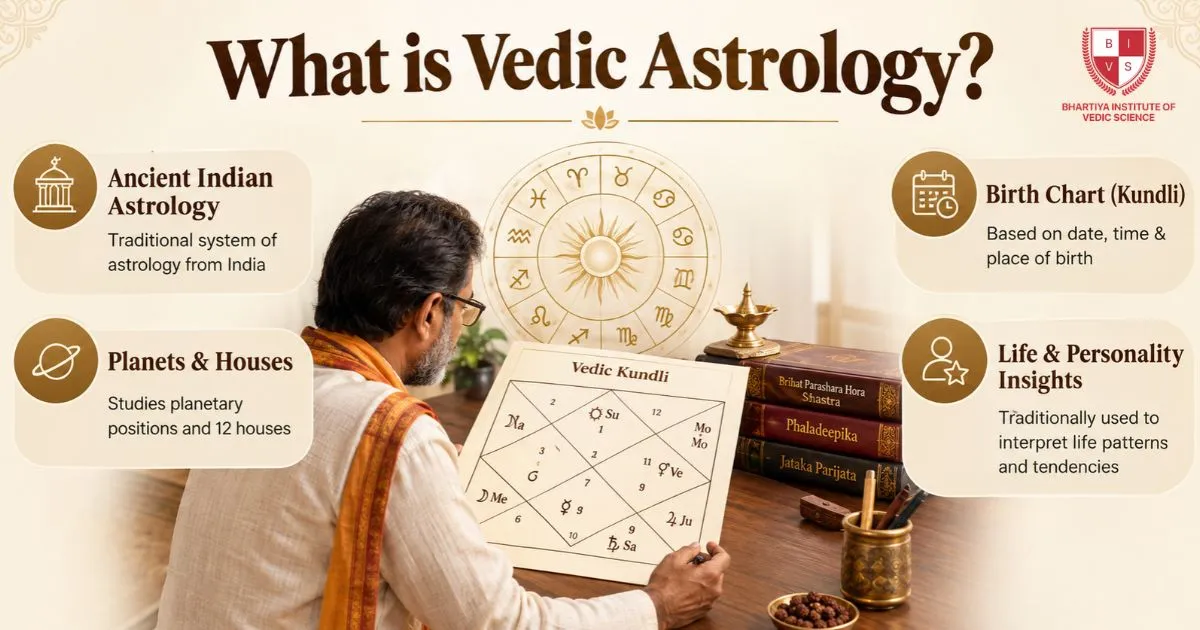
Before construction of a building, a civil engineer goes through a big paper, known as a map or blueprint of the house. It helps him understand where the construction must go. Or you have google maps,which guides you to the location you want to go. Similarly we have the birth chart, which is known as Kundli in India, is a chart that represents the position of the celestial body at the particular birth time and location, which determines your whole life.
Also as per Vedic astrology, when you know the exact birth time and location it is very important, because the ascendant or the lagna is known for changing relatively quickly. So the location is very much needed for the astronomical calculations that involve the local horizon and also the planetary position.
Note down the things included in Kundli:
-
Ascendant or Lagna
-
Twelve zodiac signs
-
Twelve houses
-
Nine traditionally used Grahas
-
Planetary positions
-
Nakshatra information
-
Aspects and relationships
-
Various combinations or Yogas
-
Dasha periods
-
Other divisional charts in more advanced Jyotish
The above points combine together to form a kundli which acts as the basic map for traditional Vedic astrology interpretation.
The 12 Zodiac Signs:
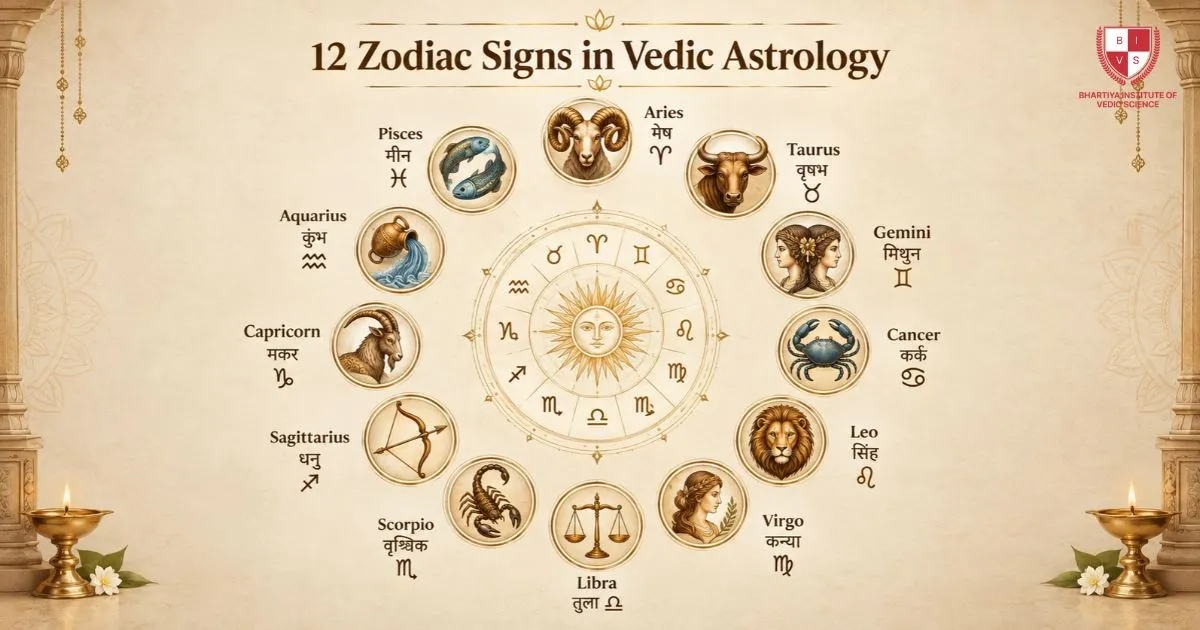
There are a total of 12 zodiac signs that tell about the future of an individual. It is classified into two types, which is based on sun-sign and moon-sign. While the western method includes the birth date, indian includes the moon and sun sign. Let us know about the 12 zodiac signs.
|
Serial Number |
English Name |
Hindi Name |
|
1 |
Aries (March 21 – April 19): |
Mesha |
|
2 |
Taurus (April 20 – May 20): |
Vrishabha |
|
3 |
Gemini (May 21 – June 20): |
|
|
4 |
Cancer (June 21 – July 22): |
Karka |
|
5 |
Leo (July 23 – August 22): |
Simha |
|
6 |
Virgo (August 23 – September 22): |
Kanya |
|
7 |
Libra (September 23 – October 22): |
Tula |
|
8 |
Scorpio (October 23 – November 21): |
Vrishchika
|
|
9 |
Sagittarius (November 22 – December 21): |
|
|
10 |
Capricorn (December 22 – January 19): |
Makara |
|
11 |
Aquarius (January 20 – February 18): |
Kumbha
|
|
12 |
Pisces (February 19 – March 20): |
Meena |
Thus through the use of the above table, you can know about the zodiac sign. If you are looking for the basic interpretation, each of the zodiac signs is said to be associated with the particular qualities, elements, modalities and also the planetary rulership.
For example, traditionally:
-
Mesha is ruled by Mars.
-
Vrishabha is ruled by Venus.
-
Mithuna is ruled by Mercury.
-
Karka is ruled by the Moon.
-
Simha is ruled by the Sun.
-
Kanya is ruled by Mercury.
-
Tula is ruled by Venus.
-
Vrishchika is ruled by Mars.
-
Dhanu is ruled by Jupiter.
-
Makara is ruled by Saturn.
-
Kumbha is traditionally ruled by Saturn.
-
Meena is ruled by Jupiter.
So when you understand about the 12 zodiac signs, it is one of the first steps in learning about Vedic astrology for beginners.
Read More: 1st House in Astrology
Navagraha: Most Important Part of Astrology
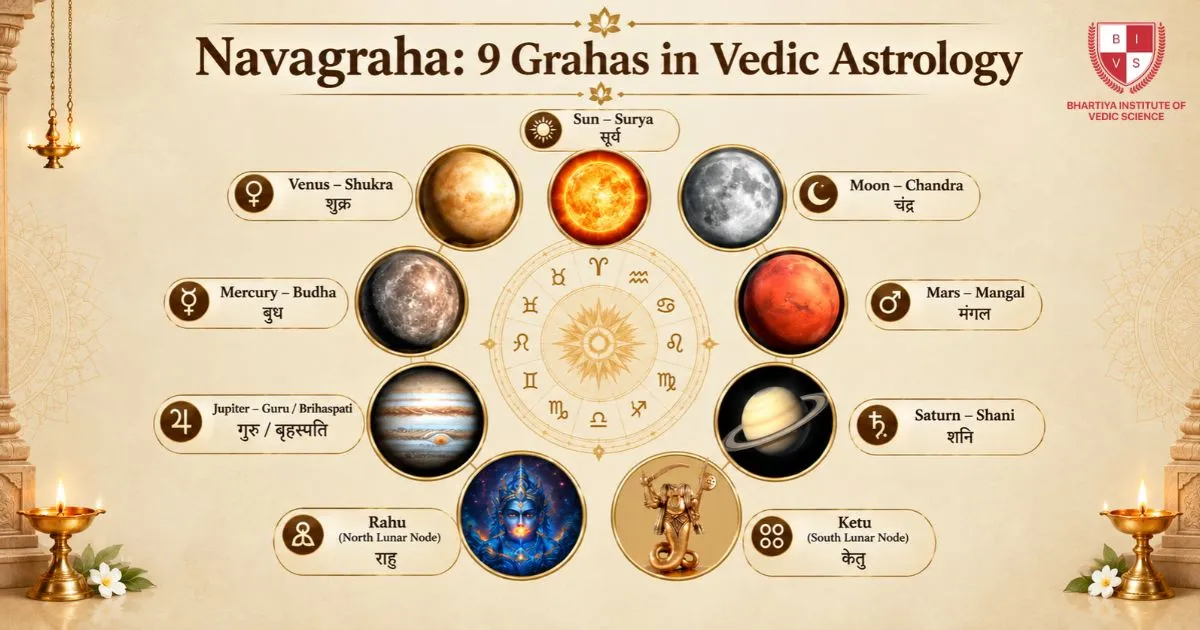
Astrology is a very vast concept, but when it comes to basics you need to understand about Navagraha or say the nine planets. But hey, do not be confused with the 9 planets in the solar system. It is a bit different. So as a beginner the 9 Grahas you need to study includes:
The 9 Grahas or planets in astrology are:
-
Surya - Sun
-
Chandra - Moon
-
Mangala - Mars
-
Budha - Mercury
-
Guru or Brihaspati - Jupiter
-
Shukra - Venus
-
Shani - Saturn
-
Rahu - North Lunar Node
-
Ketu - South Lunar Node
Known to be an important point for the beginners, just know that Rahu and Ketu are not physical planets. They just represent the lunar nodes, in mathematical point, where the Moon’s orbit is known for intersecting the apparent path of the Sun. But in India Jyotish Rahu and Ketu are the most important grahas for interpretation. So here the term planet is used broadly in the beginner explanations, although Graha is more technically appropriate in the traditional system.
Learn about the 9 Grahas
1. Sun - Surya
The first grah or planet is the Sun. Worshipped as God, he is seen as a father figure in Hindu tradition.
The characteristics of Sun are given below:
-
Identity
-
Authority
-
Leadership
-
Confidence
-
Vitality
-
Recognition
-
Father
-
Government and administration
So when you read kundli, the sun sign, house, strength and relationship are considered when interpreting about these themes.
2. Moon - Chandra
The 2nd is Moon or Say Chandra. He is God of emotions. The characteristics of Moon are given below.
The Moon is associated with:
-
Mind
-
Emotions
-
Habits
-
Sensitivity
-
Mother
-
Mental impressions
-
Adaptability
Chandra is known for playing an important role in Jyotish because the lunar position is central to Nakshatra and also the Dasha calculations.
3. Mars - Mangala
Mars or Mangal is the third house and it is associated with many things,
Mars is traditionally connected with:
-
Courage
-
Energy
-
Action
-
Competition
-
Physical strength
-
Initiative
-
Engineering and technical abilities
Mars or Mangal is one of the third houses which is considered to be in relation with conflict, assertiveness and also determination.
4. Mercury - Budha
Mercury is the 4th grah or planet which is also known as Budha in Indian astrology.
Mercury is traditionally connected with.
-
Communication
-
Learning
-
Logic
-
Mathematics
-
Business
-
Analysis
-
Writing
-
Intellectual skills
It deals with your communication style, analytical tendencies, intelligence etc.
5. Jupiter - Guru
Jupiter or Guru is the planet in astrology that determines your knowledge related things.
Jupiter is traditionally associated with:
-
Knowledge
-
Wisdom
-
Teachers
-
Philosophy
-
Expansion
-
Ethics
-
Children
-
Higher learning
As per Jyotish, it is the planet that is known for giving importance to questions that involve education, wisdom, guidance and also growth.
6. Venus - Shukra
Venus is one of the planets that deals with relationships,love life etc.
Venus is associated with:
-
Relationships
-
Marriage
-
Beauty
-
Art
-
Luxury
-
Creativity
-
Pleasure
-
Material comforts
It is important when you are analyzing the relationship, artistic interests and also the comforts.
7. Saturn - Shani
Saturn is one of the planets that is known as God of karma.
Saturn is traditionally associated with:
-
Discipline
-
Responsibility
-
Patience
-
Hard work
-
Delays
-
Structure
-
Service
-
Long-term development
It often emphasizes patience and gradual development rather than immediate results.
8. Rahu
Rahu is known for representing the north lunar node.
Rahu is traditionally associated with:
-
Ambition
-
Desire
-
Innovation
-
Foreign influences
-
Unconventional experiences
-
Material aspirations
Rahu can take on different interpretations depending on its sign, house, Nakshatra, and planetary associations.
9. Ketu
Ketu is known for representing the south lunar node
Ketu represents the south lunar node and is traditionally associated with:
-
Detachment
-
Spirituality
-
Introspection
-
Separation
-
Past patterns
-
Research
-
Liberation-oriented themes
Like Rahu, Ketu needs to be interpreted within the context of the complete chart.
Read More: 7th House in Astrology
What are the 12 Houses in a Kundli?
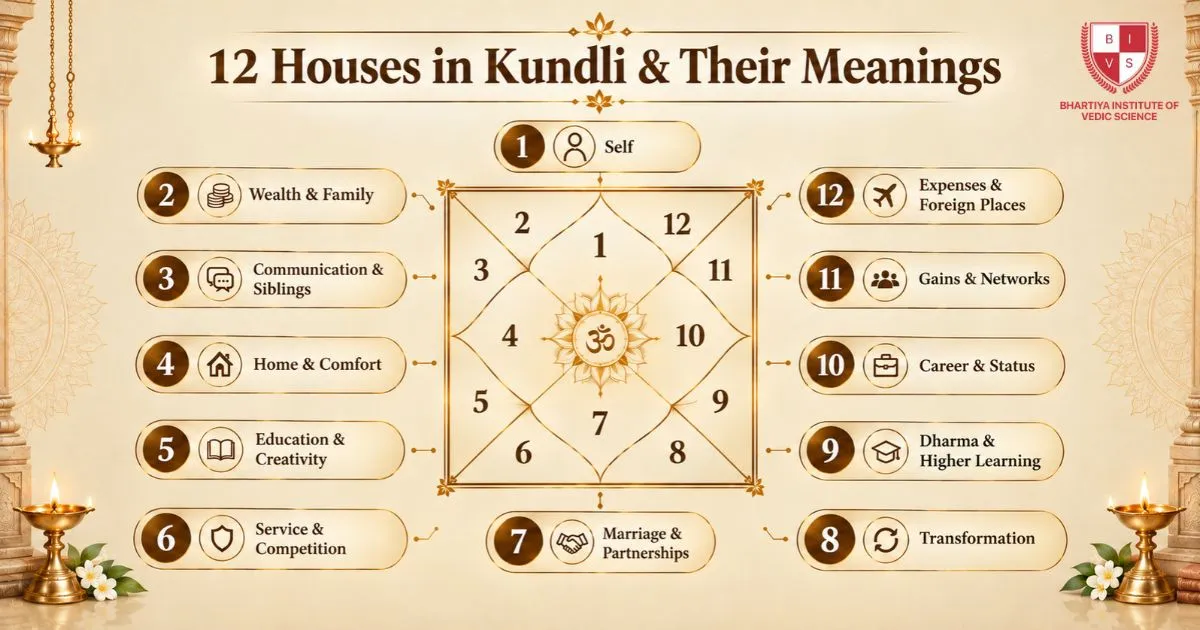
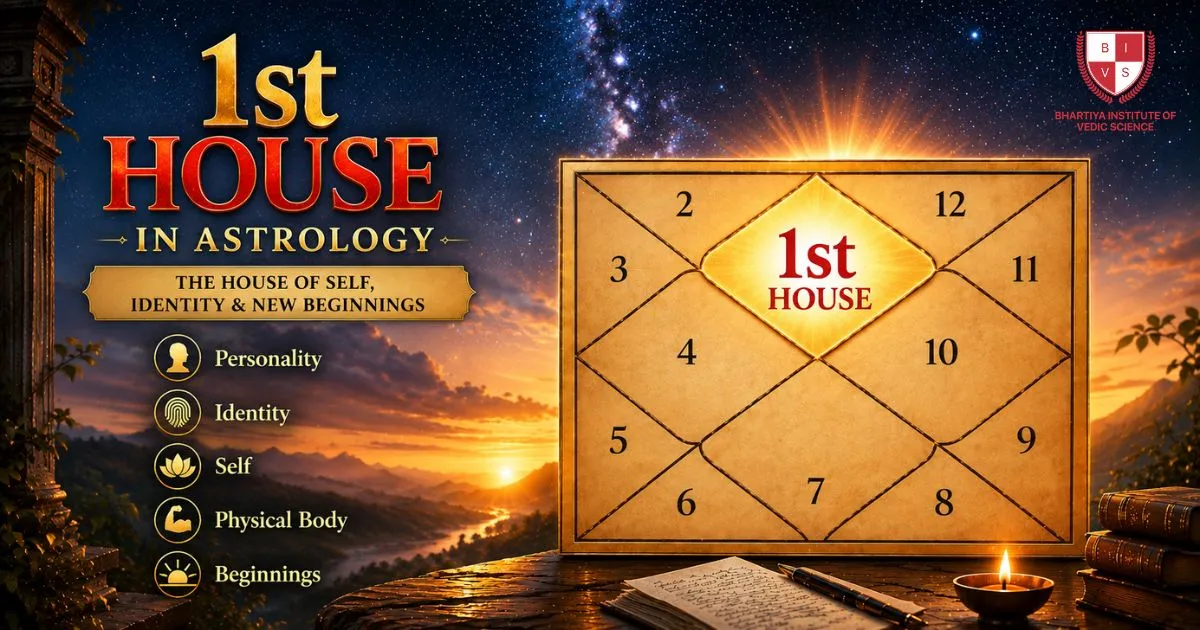
You have learnt about the 12 zodiac signs which is about one layer of the chart, but the 12 houses or Bhavas are known for representing the different areas of life. The table given below is known for describing the 12 houses in Kundli.
|
House |
Traditional Area of Life |
|
1st |
Self, personality, appearance |
|
2nd |
Wealth, family, speech |
|
3rd |
Communication, courage, siblings |
|
4th |
Home, mother, property, comfort |
|
5th |
Education, creativity, children |
|
6th |
Service, health, competition |
|
7th |
Marriage, partnerships |
|
8th |
Transformation, inheritance, occult subjects |
|
9th |
Dharma, higher learning, fortune |
|
10th |
Career, profession, status |
|
11th |
Gains, networks, income |
|
12th |
Expenses, foreign places, retreat |
This is a simplified beginner level framework, like for example if the planet is placed in the 10th house, then the traditional astrologer examines the relationship with career and the public responsibilities. But interpretation does not come from the house alone. It is the sign that is occupying the house, lords, planets placed there, aspects and also dasha periods might be also considered.
What are Nakshatras?
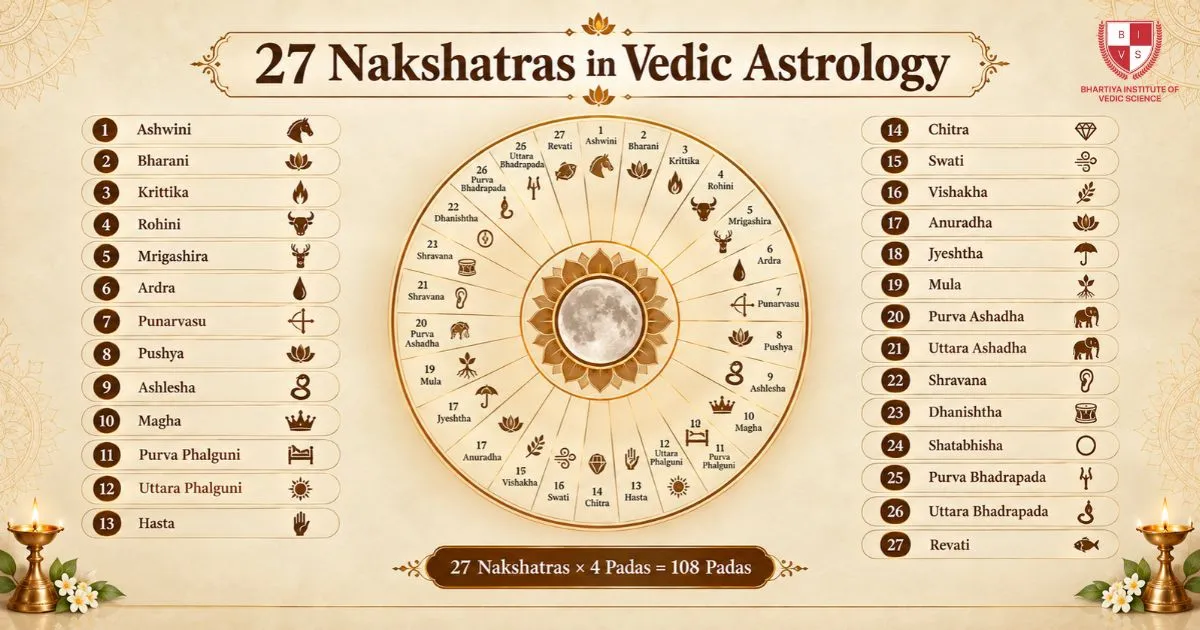
There are 27 types of Nakshatras which act as the distinctive feature of the Vedic astrology. The historical sources say that the Nakshatras are very important in Indian astronomical and calendrical traditions. The Vedanga Jyotisha, for example, is known for tracking the Sun and Moon in relation to the Nakshatra.
The Commonly used 27 Nakshatras are:
-
Ashwini
-
Bharani
-
Krittika
-
Rohini
-
Mrigashira
-
Ardra
-
Punarvasu
-
Pushya
-
Ashlesha
-
Magha
-
Purva Phalguni
-
Uttara Phalguni
-
Hasta
-
Chitra
-
Swati
-
Vishakha
-
Anuradha
-
Jyeshtha
-
Mula
-
Purva Ashadha
-
Uttara Ashadha
-
Shravana
-
Dhanishtha
-
Shatabhisha
-
Purva Bhadrapada
-
Uttara Bhadrapada
-
Revati
Each Nakshatra is further divided into four Padas, giving 108 Padas in total.
For a beginner learning Jyotish, understanding the Moon's Nakshatra is particularly important because Nakshatras are closely connected with traditional Dasha calculations.
Nakshatras: Why They are important
-
It is known for adding details beyond the 12 zodiac signs.
-
Two people can have the same moon sign but have different nakshatras.
Each Nakshatra has:
-
Planetary ruler
-
Deity association
-
Symbolic meaning
-
4 Padas
-
Unique qualities
-
Used in traditional Jyotish and Muhurta.
-
Historically linked to Indian timekeeping and ritual timing.
Sidereal Zodiac & Planetary Positions
The sidereal zodiac or the Nirayana zodiac is the term that is used in Vedic astrology. It relates to the planetary position for the stellar reference points. The Ayanamsha accounts for telling the difference between the sidereal and tropical system. The planetary includes the planet, zodiac sign,degree, nakshatra,pada, house and the motion. These combinations help in getting the right predication.
Aspects & Dashas
In Vedic Astrology, the Dashas and the planetary aspects describe the traditional planets' influence on the houses and the planets. Dashas are actually the planetary periods which are used for traditional timing. Like the Vim shottari Dasha is known for following the 120 year cycle that involves Ketu, Venus, Sun, Moon, Mars, Rahu, Jupiter, Saturn and Mercury.
Gochar & Yogas
Gochar, or planetary transits, describes the movement of planets through the zodiac after birth and is traditionally studied alongside the natal chart and Dashas. Yoga refers to specific planetary combinations or relationships. Traditional Yogas may relate to wealth, education, career, leadership, creativity, or other themes. Their interpretation depends on the complete chart rather than one combination alone.
Read More: Which Colour To Wear on Which Day Astrology
How to Read a Kundli as a Beginner?
If you are completely new to Jyotish, follow a structured process.
Step 1: Check the Birth Details
Start with:
-
Date of birth
-
Exact birth time
-
Birth location
These details are used to calculate the chart.
Step 2: Identify the Lagna
Find the Ascendant or Lagna.
This establishes the first house and helps organize the remaining houses.
Step 3: Identify the Moon Sign
Next, identify the zodiac sign occupied by the Moon.
The Moon is especially important in Jyotish and is also used for determining the birth Nakshatra.
Step 4: Find the Nakshatra
Identify the Moon's Nakshatra and Pada.
This provides another layer of traditional interpretation and is important for many Dasha calculations.
Step 5: Locate the Navagraha
Study where the Sun, Moon, Mars, Mercury, Jupiter, Venus, Saturn, Rahu, and Ketu are placed.
Step 6: Study the Houses
Look at which planets occupy the 12 houses.
Then examine the lords of those houses.
Step 7: Study Planetary Relationships
Look for conjunctions, aspects, exchanges, and other traditional relationships.
Step 8: Examine Dashas
After understanding the basic chart, learn which planetary period is operating.
Step 9: Examine Transits
Finally, compare current planetary positions with the natal chart.
This systematic approach is much more useful than trying to predict something from a single planet.
Common Mistakes Beginners Make in Vedic Astrology
1. Reading Only the Sun Sign
- Vedic astrology is much more than knowing your zodiac sign.
- The complete Kundli includes the Lagna, Moon, Planets, Houses, Nakshatras, and many other factors.
2. Looking at One Planet in Isolation
A planet's meaning depends on:
-
Sign
-
House
-
Lordship
-
Aspects
-
Conjunctions
-
Nakshatra
-
Strength
-
Dasha
-
Transit
Therefore, one placement should not automatically be interpreted as a complete prediction.
3. Ignoring the Birth Time
An inaccurate birth time can affect the Ascendant and house structure.
4. Memorizing Without Understanding
Memorizing hundreds of rules is less useful than understanding how different principles interact.
5. Treating Predictions as Guaranteed
Traditional astrology involves interpretation. A responsible learner should avoid presenting astrological interpretations as certain outcomes.
6. Starting With Advanced Techniques Too Early
Learn the basic chart first. Advanced Vargas, Ashtakavarga, Jaimini techniques, Tajika, Prashna, and other specialized systems can be studied later.
Learning Roadmap for Vedic Astrology Beginners
If you want to learn Jyotish systematically, the following roadmap can help.
Stage 1: Learn the Vocabulary
Understand:
-
Jyotish
-
Kundli
-
Lagna
-
Rashi
-
Bhava
-
Graha
-
Nakshatra
-
Dasha
-
Gochar
-
Yoga
Stage 2: Learn the 12 Signs
Memorize their:
-
Names
-
Symbols
-
Elements
-
Modalities
-
Planetary rulers
Stage 3: Learn the Navagraha
Understand the traditional significations of each Graha.
Stage 4: Learn the 12 Houses
Know what each house traditionally represents.
Stage 5: Study Nakshatras
Learn all 27 Nakshatras and their basic characteristics.
Stage 6: Learn Chart Synthesis
Combine:
Planet + Sign + House + Lordship + Aspect + Nakshatra
Stage 7: Learn Dashas
Begin with Vimshottari Dasha.
Stage 8: Learn Gochar
Study planetary transits in relation to the natal chart.
Stage 9: Practice With Charts
Practice reading sample Kundlis rather than only reading theory.
Stage 10: Study Advanced Jyotish
Only after mastering the fundamentals should you move into:
-
Divisional charts
-
Ashtakavarga
-
Advanced Yogas
-
Jaimini astrology
-
Prashna
-
Muhurta
-
Birth-time rectification
Birth time rectification helps bridge uncertain birth records and accurate astrological analysis. In Vedic Astrology, an accurate birth time helps determine the Lagna, divisional charts, and Dashas for better chart interpretation. By studying major life events, planetary periods, and Nakshatra positions, astrologers can work toward identifying the most accurate birth time.
Want to learn Vedic Astrology? Explore the course by Bharatiya Institute of Vedic Science and start learning step by step.