By Jyoti Chauhan, Content Writer · Reviewed by Gurudev Shrie Kashyap, Founder, Bhartiya Institute of Vedic Science
Key Takeaways
- Vivah Panchami marks the wedding of Lord Ram and Sita. It falls on the Shukla Panchami of the Margashirsha month.
- In 2026 it is on Monday, 14 December. The Panchami tithi runs from the evening of 13 December to the evening of 14 December in New Delhi, so check a panchang for your city.
- The day is celebrated with Ramcharitmanas recitation, Ram-Sita kalyanam ceremonies and processions, especially in Ayodhya and Janakpur.
- Customs differ by region. Some families treat the day as auspicious for weddings, while others avoid it, so follow your own family tradition.
- Dates come from the panchang and can move by a day by location, so confirm before you plan.
Every year, as the cold settles over north India, temples in Ayodhya and Janakpur fill with wedding songs, flowers and a bridal procession. The occasion is not a human wedding but a divine one: the marriage of Ram and Sita, remembered as Vivah Panchami.
This guide gives the 2026 date, the story behind the festival, the way it is celebrated and what the tradition does and does not say about weddings on this day.
Vivah Panchami 2026 Date and Tithi
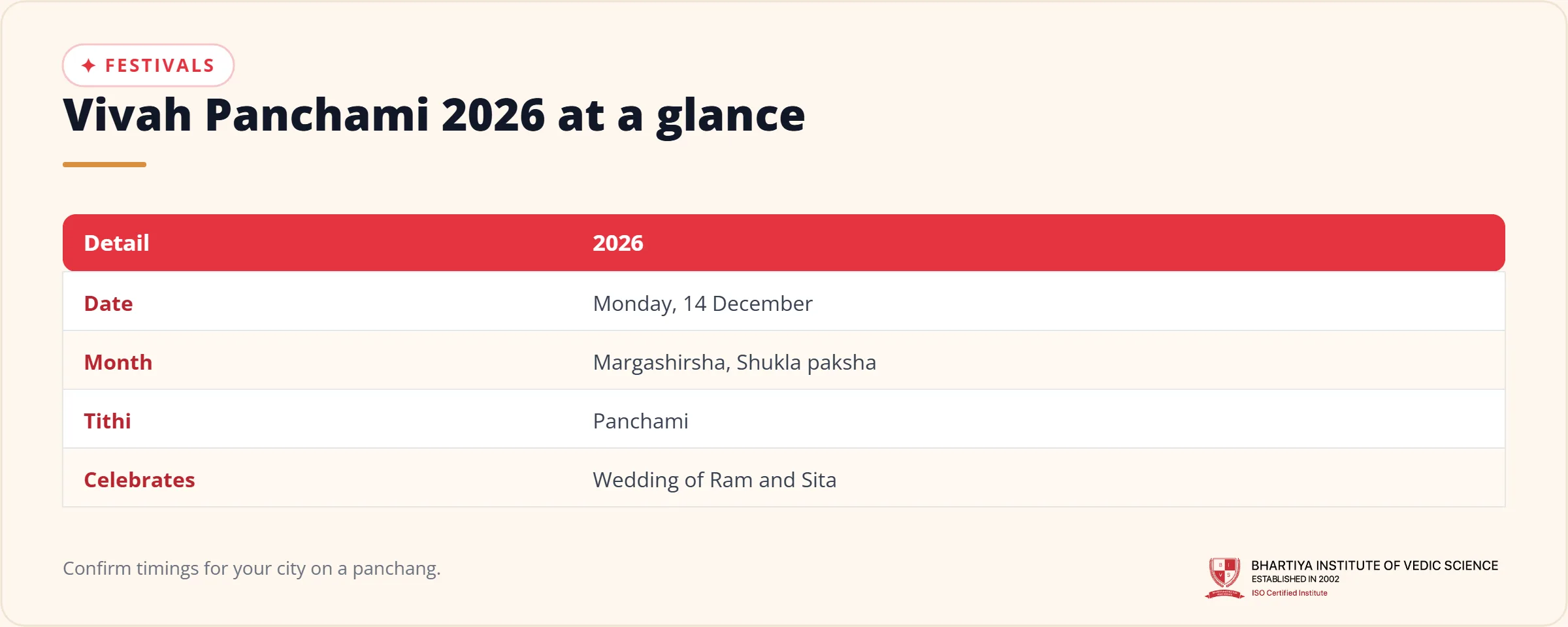
Vivah Panchami is observed on the fifth lunar day (Panchami) of the waxing fortnight of Margashirsha. For 2026, the date is Monday, 14 December. The Panchami tithi begins at around 4:48 pm on 13 December and ends at around 7:16 pm on 14 December for New Delhi. Because the festival follows the tithi at sunrise, the day of observance is 14 December.
| Detail | Vivah Panchami 2026 |
|---|---|
| Day and date | Monday, 14 December 2026 |
| Lunar month and paksha | Margashirsha, Shukla (waxing) fortnight |
| Tithi | Panchami |
| Panchami begins (New Delhi) | About 4:48 pm, 13 December |
| Panchami ends (New Delhi) | About 7:16 pm, 14 December |
These timings are for New Delhi. Tithi timings shift with location, so confirm yours on Drik Panchang or a trusted local panchang. If you are new to reading one, our guide to panchang basics explains tithi, nakshatra, yoga and karana.
The Story of Ram and Sita's Wedding
The story is told in the Bala Kanda of the Valmiki Ramayana and in Tulsidas's Ramcharitmanas. King Janaka of Mithila found Sita in a furrow while ploughing, and raised her as his daughter. When she came of age, he announced a swayamvara in which the suitor would have to string the great bow of Lord Shiva.
Princes from many kingdoms tried and failed. Ram, who had come to Mithila with the sage Vishwamitra and his brother Lakshman, lifted and strung the bow, and it broke. King Janaka welcomed him, and the marriage was fixed. King Dasharatha and the family came from Ayodhya, and the wedding was celebrated with Ram, Sita and the brothers marrying in the royal family of Mithila.
The wedding is remembered as a model of respect, dignity and devotion between spouses.
Why Vivah Panchami Is Significant
- A celebration of an ideal marriage. Ram and Sita are held up as examples of loyalty, mutual respect and duty.
- A day for the Ramayana. Devotees read or listen to the story, especially the wedding episode.
- A cultural link between Ayodhya and Mithila. The day connects the groom's and bride's homelands.
- A time for family gathering. Temples hold community programmes, music and feasts.
How Vivah Panchami Is Celebrated
Practices vary, but the most common ones are:
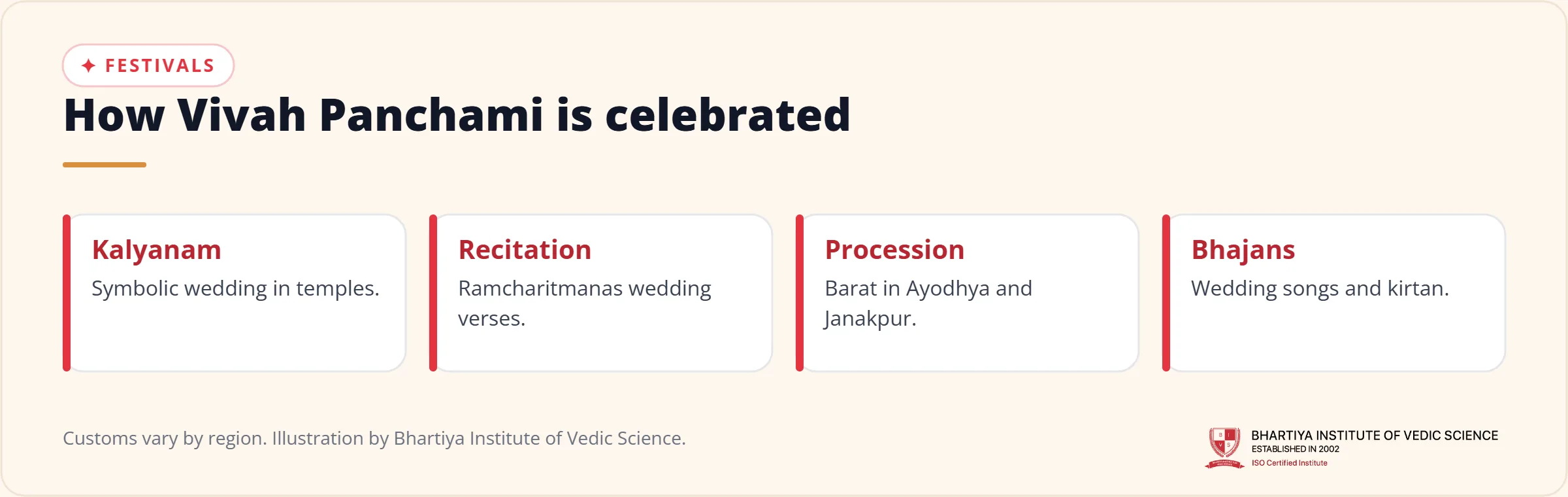
- Ram-Sita kalyanam: temples perform a symbolic wedding with the idols dressed as a bride and groom.
- Ramcharitmanas recitation: many homes recite the Bala Kanda wedding verses, or hold a path.
- Processions (barat): in Ayodhya and Janakpur, a procession of Ram's idol travels to the bride's temple.
- Bhajans and kirtan: wedding songs and devotional music fill the day.
- Fasting and puja: some devotees fast and offer flowers, fruits and sweets.
Where It Is Celebrated Most Grandly
Janakpur, in Nepal's Mithila region, hosts the largest celebrations. The Janaki Mandir, dedicated to Sita, holds a wedding procession and ceremonies that draw many pilgrims, including visitors from India. Ayodhya, Ram's birthplace, also holds temple programmes, and many Ram temples across India observe the day with music and recitation.
Weddings on Vivah Panchami: What Does Tradition Say?
People often ask whether the day is good or bad for a human wedding. The answer depends on region and family. Some communities consider it highly auspicious because of the divine wedding. In parts of Mithila and elsewhere, families avoid arranging weddings on this day, because Sita's later life in the story was one of hardship, and they prefer not to link it to a daughter's marriage.
Neither view is a rule for everyone, and neither is a prediction about your marriage. If you are planning a wedding, discuss the date with your family and a priest you trust, and look at the full panchang and the couple's charts, not a single festival date. Our introduction to Vedic astrology explains how timing is chosen.
Simple Ways to Observe the Day at Home
- Clean and decorate the puja space with flowers.
- Place images of Ram and Sita and offer a lamp and simple sweets.
- Read or listen to the wedding episode from the Ramayana or Ramcharitmanas.
- Sing a bhajan with the family.
- Share prasad with neighbours.
About the Margashirsha Month
Margashirsha, also called Agahan or Aghan in some regions, is the ninth month of the traditional Hindu calendar in the amanta system followed in much of India, and it usually falls in November and December. It is regarded as a month for devotion. Observances in this season include Vivah Panchami, Kaal Bhairav Jayanti in some years, and Gita Jayanti. Calendars differ between the amanta and purnimanta systems, which is one more reason to check the date locally before planning a programme or a fast.
Vivah Panchami for Children and Families
The festival is an easy way to share the Ramayana with younger family members. Families can retell the wedding episode in simple words, draw the scene together or sing a short bhajan. Keeping the day light and joyful helps children connect with the story and its values of respect and kindness.
Other Dates in the Same Season
Margashirsha is a busy month for observances. You may also like our explainer on Kaal Bhairav Jayanti. For earlier festival guides, see Ganesh Chaturthi and Bhai Dooj.
What the Panchang Can and Cannot Tell You
A panchang can tell you when the tithi begins and ends in your city. It cannot tell you that one wedding date is lucky and another cursed. Use the date for observance and for planning your day, and leave decisions about marriage to the people involved.
Conclusion
Vivah Panchami is a day to remember the wedding of Ram and Sita, to read their story and to celebrate with family. In 2026 it falls on Monday, 14 December, and the exact timings are best confirmed for your city.
If you would like to learn how the panchang and charts are read, you can see the astrology course at Bhartiya Institute of Vedic Science or book a free 15-minute demo call. How does your family mark the day?
This article describes traditions and beliefs for educational purposes. Dates and timings vary by location, so please confirm them locally.