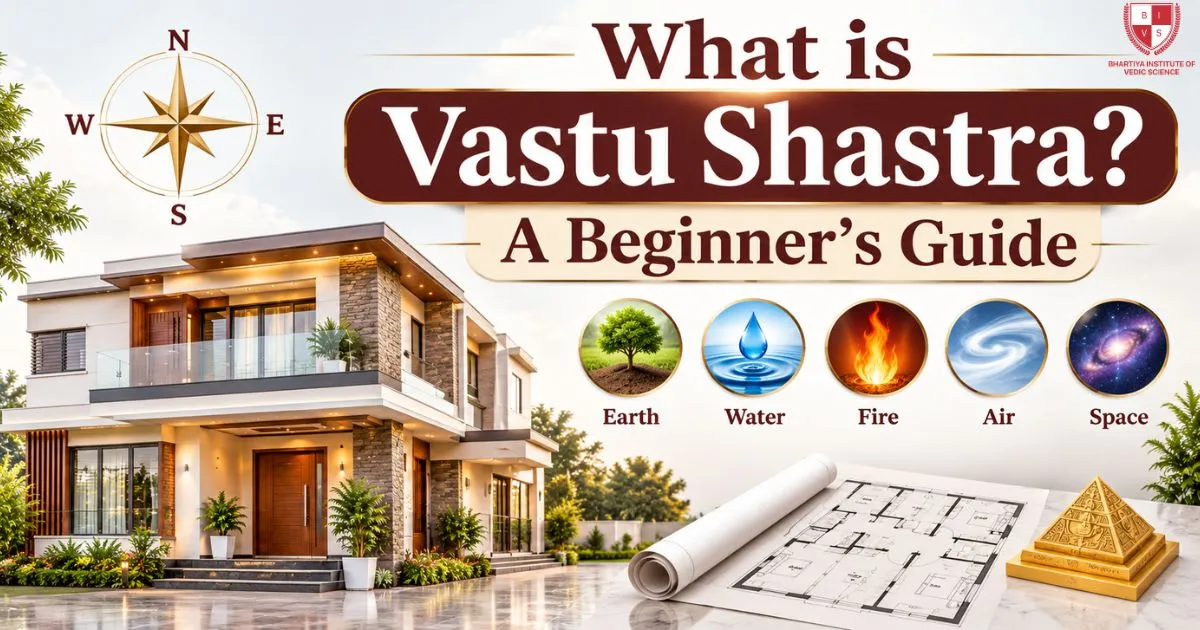
What is Vastu Shastra? Meaning and Basic Principles
Vastu Shastra can be defined as the India ancient system of architecture and design that tells about the science of dwelling. You can imagine it as a text consisting of Hindu texts and shlokas describing the geometry and important directions to attract harmony and peace in your life. It is more than a book, more than science, which involves directions that favour positivity, abundance and success in your life.
Some of its core principles include:
Panchbhootas (Five Elements)
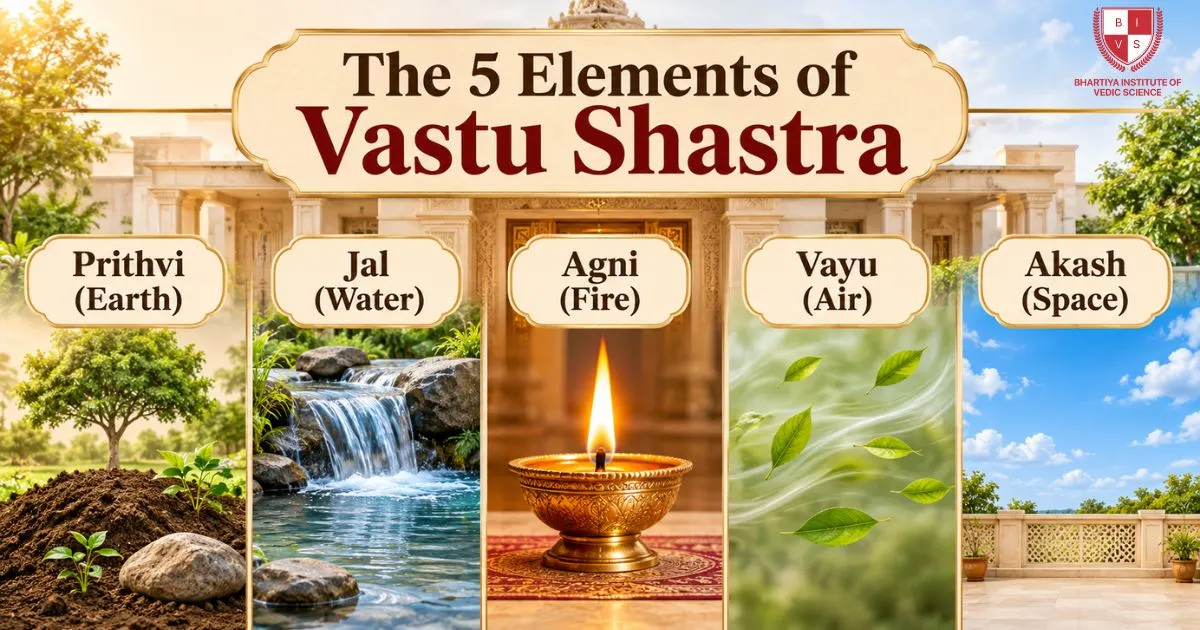
It is used for balancing the five elements, like earth, water, fire, air and space within the building.
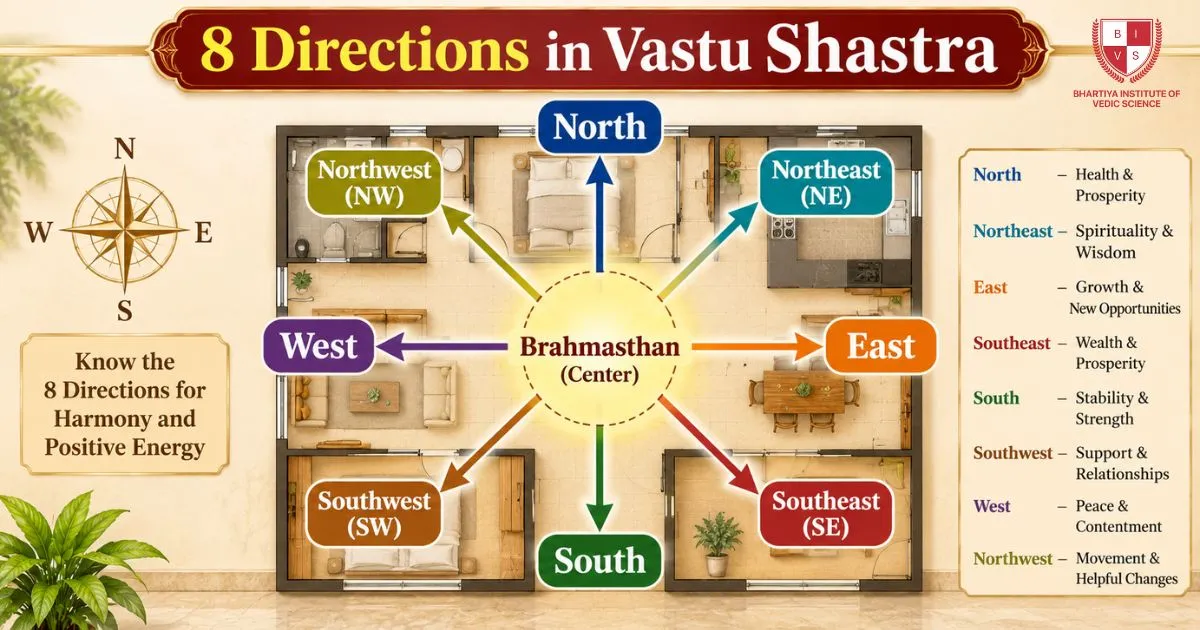
Eight Directions
Aligning the structure with the cardinal and intermediate directions (north, northeast, east, southeast, south, southwest, west and north-west), each governed by specific deities and energy zones.
Mandala (Grid Planning)
There is usage of modular grid layouts (which includes the Vastu Purusha Mandala) with the central area known as Brahmasthana.
It is not just the core principles that make a building a place to live in, but also certain other factors. Also, if you are a newbie and want to become a Vastu expert, this blog is also for you.
Read More: Pooja Room Direction as per Vastu
Why is Vastu Shastra Important for Your Home?
You already have the idea about Vastu Shastra and how its principles change the environment of your house. But why is it so important? Long ago, people used to consult the pundits along with builders for choosing the plot for building, constructing the house, spaces and many other things. It kept the house away from ghosts, negative energy, etc. Also, if someone's house is not pure and has vastu defects, then the use of Vastu principles and guidelines can help in formulating it in a better space for its inhabitants.
What is the History and Origin of Vastu Shastra?
Lord Brahma (the creator of this universe) asked Vishwakarma (God of architecture) to develop the guidelines for the construction of the building. So he developed the architectural system aligning with the great elements: fire, air, water, earth and also space. The direction includes east, west, south and north governed by the specific elements.
Also, Vastu Shastra guides you in organising the area within structure based on the functions of these elements and their relationship with each other.
According to Vastu Shastra, each direction is under the control of a different God who supervises the particular sectors of the house. For example, the southeast (Agney) is under the control of the god of fire. So it is good for the kitchen, as it can consume the power of elements from nature by utilising the different spaces in your house through the use of Vastu guidelines.
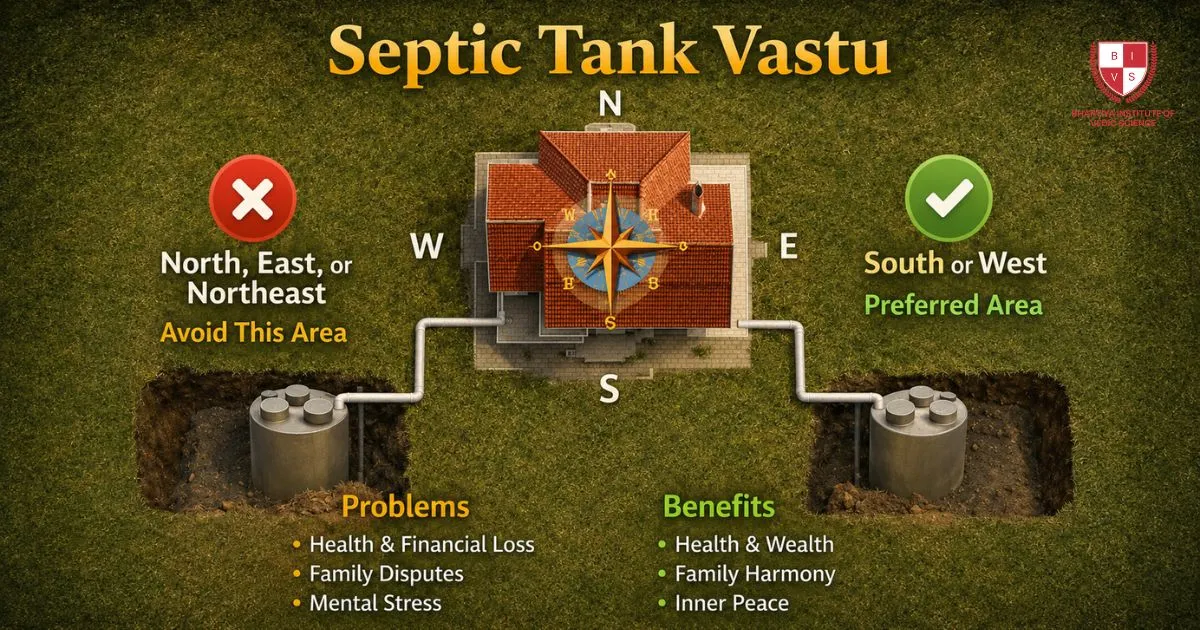
Read More: Placement of Septic Tank As Per Vastu
4 Important Vastu Shastra Terms Every Beginner Should Know
Till now you have understood about Vastu Shastra and memorised terminology in Sankrit before you proceed, and the four terms enable you to understand the explanations and find out what a practitioner is referring to:
Brahmasthan
It is the central portion of the house or the plot. It is the place which needs to be left empty without any kind of obstacles. Also in the existing structure, the position has been ascertained in the given layout.
Panchamahabhutas
This combines to form the five basic elements – earth, water, fire, air, and space. The recommendations in Vastu are based on this combination.
Prana Pathway
Prana is known for referring the life force or energy in Indian traditions. It refers to the movement of this energy through the space, as explained in certain Vastu explanations, often from northeast to southwest. It is the term that does not refer to the current of air or electricity but the energy movement.
Vastu Purusha Mandala
It is a grid that is used to overlay on the site or the building as per orientation for planning structure as per recommendations. It is more in detail than the 9 zone division explained later in this guide.
Read More: Toilet Direction as per Vastu
How Does Vastu Shastra Work? Understanding Its Basic Principles
Vastu Shastra is known to be working with the directions, elements and also the use of space within the framework of the building or the plot. The practitioner examines the plan and the orientation and also compares the placement of rooms, entrances and the other elements within the principles of the particular vastu method used.
The eight directions which are considered in Vastu include north, south, west, northeast, southeast, southwest and northwest. The centre of the point of reference on its own is
Understanding about Directions in Vastu Shastra
|
Direction or zone |
Traditional element |
Common room or space association |
What to notice in your layout |
|---|---|---|---|
|
Northeast |
Water, or Jal |
Prayer, meditation, or suitable water features |
Identify what occupies this area and if it is cluttered with storage. |
|
Southeast |
Fire, or Agni |
Kitchen and cooking area |
Mark the kitchen and cooking appliances on the plan. |
|
Southwest |
Earth, or Prithvi |
Main bedroom or heavier storage |
Locate the main bedroom and large storage units. |
|
Northwest |
Air, or Vayu |
Guest rooms and areas associated with movement |
Note the room’s use, openings, and connections with other areas. |
|
Centre |
Space, or Akash |
Open central area or courtyard in suitable buildings |
Check whether this area is open, cluttered, or occupied with a fixed structure. |
To illustrate, the southeast direction is associated with fire, recommending that the cooking area be located in this part of a home. At the same time, the placement of a kitchen is also considered in terms of ventilation, electrical wiring, and the size of a cooking area.
Vastu Shastra principles provide a traditional outlook on the art of spatial planning.
Read More: Main Door Vastu
Why is Vastu Shastra Important for Home and Career?
In this Vastu Shastra guide, you will know about the importance of Vastu both in home and career. With the correct guidance of vastu principles, you will know what placements and directions can bring change in your home and career.
Better Understanding of Home
When the various areas of life are labelled well, then it gives insights about its present situation. Like a big piece of furniture is blocking the path or the window is in the wrong direction where no sunlight enters. So when you focus on these details, you can focus on what is wrong and how you can get it right.
Keeping Family and Yourself Safe
So when you examine the position of the rooms and use them, you think of utilising them for better lighting, noise affecting each other's rooms and many other things. Also the little things like the dustbin near the gate, the dressing table in front of the window and many other things. So when you realise it, you take steps to make everything right.
Working Environment Observations
The north direction is associated with prosperity in Vastu Shastra, which means someone is working from home and can examine the area and change in the position of the organisation that would benefit them. Direction alone is not guaranteeing financial stability, but the assessment of the workspace is always useful.
Getting Started with Vastu Shastra
The Vastu consultant is someone who has learnt the basics on their own before studying to be a professional. If you are looking for a bright future and want to make a career in this field, understanding the principles of space is a must.
Read More: South East Facing House Vastu
Why is Vastu Shastra Important in Modern World
-
Vastu Shastra recommendations are often considered after purchasing or renting a house rather than during the planning stage.
-
The flats which have been built already have kitchens and bathrooms fixed, so making the changes is difficult.
-
The directional recommendations blindly can cause people to overlook the important practical issues.
-
Strictly adhering to every vastu principle leads to frustration and unnecessary expenses.
-
Focus on adjustable factors like the placement of furniture, room usage, lightning and the space utilisation.
-
Placing a cabinet near the window or without blocking natural light or viewing, thus improving space utilisation.
-
The specific metals or colours must be assessed individually, thus considering the traditional beliefs and limitations.
-
The practical Vastu assessment while considering the building’s existing conditions, occupant needs and the adjustments.
Read More: Brahma Kamal Plant and Vastu
Conclusion
“What is Vastu Shastra?" is the question that was raised in the beginning, and the answer came at the end of this blog. You came to know about the guidelines, Understanding Vastu Shastra is the first step towards exploring the traditional science of architecture and spatial planning. By learning about its five elements, directions, principles and practical applications, you can develop a deeper understanding of how spaces are traditionally planned.
If you want to take your knowledge further and explore a professional career in this field, consider enrolling in the Vastu Course at Bhartiya Institute of Vedic Science. Structured learning can help you understand traditional Vastu concepts and develop the knowledge required to explore opportunities as a Vastu consultant.